Author: infogadmin

  • Bare-Metal vs Cloud for AI Workloads: Where the Cost Curve Flips

    Bare-Metal vs Cloud for AI Workloads: Where the Cost Curve Flips

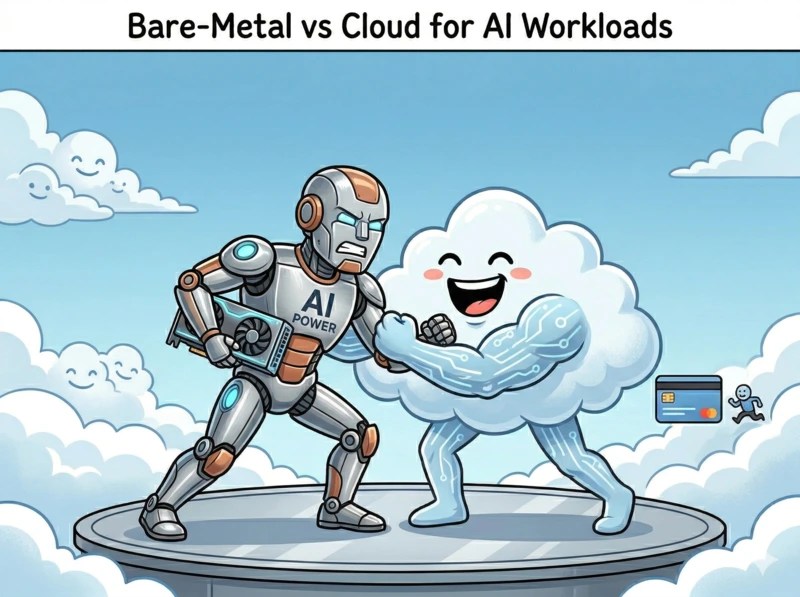
    The bare-metal vs cloud debate for AI workloads gets distorted because teams keep treating long-running GPU demand as temporary experimentation. That works for a while. Then the bills stop looking like innovation spend and start looking like bad financial discipline. Once training, fine-tuning, or inference runs become predictable, cloud pricing loses its main defense. You are no longer paying for agility. You are paying a premium for staying where you started. 

    That is the point at which GPU infrastructure costs, utilization, and operational control matter more than vendor convenience. 

    Bare metal is not automatically cheaper, and cloud is not automatically smarter. 

    The decision turns when workload patterns stabilize, finance starts questioning recurring GPU spend, and the organization has sufficient operational maturity to convert owned infrastructure into real output rather than stranded capacity.

    Why Cloud Gets Expensive for AI Workloads Faster Than Teams Expect

    Cloud is easy to justify when AI work is still chaotic. One team is testing models, another is running short training jobs, and nobody knows whether demand will disappear in two months or triple in six. In that phase, paying a premium makes sense. You are buying speed and avoiding a bad hardware decision.

    The bare-metal vs cloud for AI workloads question starts becoming real when the chaos disappears. The same training jobs keep coming back. Inference demand stops looking temporary. GPU usage starts showing up every month like a fixed operating habit rather than an experiment. That is when the cloud stops feeling flexible and starts feeling expensive.

    Cloud vs. Bare Metal: Picking the Winner for Your 2026 Budget

    What usually breaks first is not technical performance. 

    It is your ability to keep explaining the bill. 

    Finance does not mind high GPU spend when the work is new, uncertain, or politically important. 

    It starts pushing back when the workload is clearly repeatable, and you are still renting premium capacity as if nothing has stabilized. That is the point where the convenience premium becomes hard to defend.

    Bare-Metal vs Cloud for AI Workloads Comes Down to Utilization

    This decision has less to do with architectural taste and more with whether your GPUs are busy enough to earn their keep. If usage is spiky, political, and still hard to predict, cloud remains the safer choice. 

    You pay more per unit of compute, but you avoid buying capacity that sits half-idle while teams keep changing direction.

    Once utilization climbs and stays there, the math changes fast. The bare-metal vs. cloud debate for AI workloads stops being theoretical when the same model pipelines, inference jobs, or fine-tuning runs keep consuming expensive cloud GPUs week after week. 

    You are not paying for elasticity very often. You are paying a premium for the option to be flexible, even though your demand has already become fairly stable.

    Watch for these signals:

    • GPU demand is recurring, not project-based
    • The same teams need capacity every month
    • Reserved instances still do not make the cloud bill comfortable
    • Queue time, tenancy conflict, or noisy-neighbor effects are hurting throughput
    • Finance has started asking why AI infrastructure still looks like short-term rental spend
    • Platform teams can now forecast workload demand with reasonable confidence

    This is where teams usually discover the hidden breakpoint. Cloud feels cheaper while demand is uncertain. Bare metal starts making more sense when demand becomes boring. That sounds less glamorous, but boring utilization is exactly what makes owned infrastructure financially interesting.

    What to Check Before You Buy GPU Infrastructure

    Most bad AI infrastructure decisions begin the same way: one painful cloud bill, one frustrated engineering leader, and a sudden urge to “own the stack.” That is not a strategy. That is sticker shock posing as capital planning.

    Before you buy anything, get brutally clear on demand quality. 

    Not all GPU demand deserves owned infrastructure. 

    A recurring inference pipeline that supports revenue, customer-facing latency, or internal automation at known volume is one thing. 

    Random model experiments, temporary fine-tuning spikes, and politically protected AI pet projects are something else. If those are mixed, the business case is already contaminated.

    The harder question is not whether the cloud is expensive. Of course it is. The harder question is whether your demand is stable enough, valuable enough, and boring enough to justify ownership. Bare-metal starts to make sense when GPU usage stops being noisy and becomes a predictable operating load. 

    If the usage pattern still changes every quarter, the cloud may still be overpriced, but buying hardware can still be the dumber mistake.

    A serious review usually forces a few uncomfortable filters:

    • Recurring production demand matters more than loud internal demand
    • Predictable inference load matters more than occasional training bursts
    • Utilization quality matters more than raw utilization claims
    • Scheduling discipline matters more than theoretical hardware efficiency
    • Ownership maturity matters more than purchase price
    • One quarter of pain matters less than four quarters of repeatability

    This is usually when weak cases start to collapse. The cloud bill may be real. That does not automatically make the bare metal case real.

    A Rental Trap: A Blueprint for Strategic Exit from Cloud in 2026

    Where GPU Infrastructure Cost Changes the Decision

    Cloud pricing hides the pain well at first. Everything looks variable, temporary, and easy to approve. Then AI usage settles down, the same GPU-heavy jobs keep returning, and the bill starts behaving like a fixed cost with cloud markup on top.

    The real cost pressure usually comes from a few places:

    • premium GPU hourly rates staying premium long after the experimentation phase is over
    • storage, data movement, and networking charges quietly attaching themselves to model pipelines
    • The reserved capacity is still feeling expensive because the base price is already high
    • paying for headroom that rarely gets used well
    • paying extra for convenience even when demand has become routine
    • fragmented workload placement, creating waste across teams

    What makes this tricky is that cloud invoices look operationally clean. Finance likes monthly visibility. Procurement likes avoiding large capital approval. Engineering likes fast access. But clean billing is not the same as efficient economics.

    Bare metal introduces its own cost heads, and they are not decorative:

    • upfront server and GPU purchase
    • rack space, power, cooling, and support contracts
    • cluster management and scheduling overhead
    • Hardware failure planning and spare capacity
    • refresh cycle risk when the GPU market moves faster than depreciation plans, internal staffing cost to keep the platform usable

    This is where experienced teams stop asking, “Which one is cheaper?” and start asking harder questions:

    • Which model continues to hurt after utilization stabilizes?
    • Which spending is easier to reduce when priorities shift?
    • Which platform creates less waste under steady demand?
    • Which option survives a finance review without fantasy assumptions?

    The cost model changes the moment your AI estate stops behaving like exploration and starts behaving like infrastructure. 

    That is usually when cloud’s convenience premium becomes visible enough to challenge, and when bare metal has to survive a much more disciplined ROI test than enthusiasts usually expect.

    When Bare-Metal Performance Is Worth the Operational Burden

    Performance is not the main reason most teams consider bare-metal. Cost is. Performance becomes the real argument later, once cloud variability starts irritating people who have to hit delivery targets.

    You feel it in a few places:

    • training jobs waiting for the right GPU class
    • Inference pipelines are getting shaped around availability instead of business needs
    • Noisy-neighbor effects are hurting consistency
    • Data locality is becoming part of the performance story
    • Shared cloud tenancy adds latency or unpredictability
    • platform teams over-optimizing workloads just to survive infrastructure pricing

    Bare metal earns its keep when you need more than raw speed:

    • predictable throughput
    • tighter control over job scheduling
    • better alignment between hardware profile and workload type
    • fewer surprises from multi-tenant infrastructure
    • more stable performance for repeatable, high-volume jobs

    That said, performance gains do not arrive by magic. Plenty of companies buy powerful GPU servers and still fail to get clean output because the operating layer is weak.

    The burden shows up here:

    • Bad scheduling turns expensive hardware into an internal queue problem
    • Weak tenancy rules create political fights over priority
    • Poor observability hides underused capacity
    • Support gaps stretch outages and maintenance windows
    • refresh planning becomes painful once newer GPU generations reset expectations

    If your AI demand is stable and performance consistency matters to revenue, delivery speed, or internal service levels, bare metal can justify the extra work. If the workload mix remains unstable and the operating model is immature, the same move can become a very expensive lesson in self-hosted complexity.

    Why On-Prem AI Infrastructure ROI Often Gets Overstated

    On-prem AI infrastructure ROI is exaggerated for a simple reason: teams compare the cost of owned GPUs with the painful cloud pricing and mistake the gap for guaranteed savings.

    The first problem is fake utilization. The model assumes the GPUs stay busy enough to justify ownership. Real demand rarely behaves that cleanly.

    The second problem is mixed demand. Stable inference gets bundled with short-lived experiments, temporary training spikes, and internal AI noise. That makes the estate look more necessary than it is.

    The third problem is the omission of operating costs. Hardware gets priced. Scheduling, support, downtime, spare capacity, and refresh pain usually do not.

    The fourth problem is time. AI demand shifts fast. A cloud bill can shrink as demand declines. An underused GPU estate just sits there, looking expensive in a different format.

    Good ROI cases still work after you cut utilization assumptions, add operating burden, and remove noisy demand. Weak ones only work in slides.

    Bare-Metal vs Cloud for AI Workloads: Pricing and ROI View

    Model Best fit Cost advantage What breaks first Vendor examples
    Public cloud GPUs Uncertain demand, burst training, short-lived workloads No capex, instant scale, easy exit Monthly GPU spend once usage becomes steady AWS, Azure, Google Cloud
    AI-focused cloud GPUs Teams needing faster GPU access than hyperscalers Better GPU availability, AI-optimized pricing Still rental economics under sustained load CoreWeave, Lambda
    Dedicated bare metal Stable inference, repeatable GPU workloads Lower unit cost under high utilization Idle capacity kills ROI Equinix Metal, OVHcloud
    On-prem GPU infrastructure Enterprises with steady demand and mature platform teams Highest control, predictable cost at scale Operations, refresh cycles, internal contention Dell, HPE, Lenovo, Supermicro
    Hybrid model Mix of stable production and volatile experimentation Optimizes base cost + keeps flexibility Wrong workload placement wastes both sides Base: Dell, HPE + Burst: AWS, Azure, GCP, CoreWeave

    Cloud examples are easy to understand in practice. AWS, Azure, Google Cloud, and CoreWeave make sense when your AI demand is still uneven, teams are still experimenting, and nobody wants to lock capital into hardware too early. 

    You pay more, but you get fast access, easier scaling, and the option to stop without being stuck with owned GPU capacity.

    Bare metal starts making financial sense when the workload stops moving around. Say you are running steady inference or repeatable training on the same GPU class every month. 

    Then systems from Dell, HPE, Lenovo, or Supermicro stop looking like heavy procurement and start looking like a way to cut the rental premium you have been quietly paying in the cloud. 

    The catch is obvious: the savings only show up if utilization stays high and your team can run the estate properly.

    When Bare-Metal for AI Infrastructure Does Not Make Sense

    Do not buy bare metal for AI infrastructure when:

    • GPU demand is still experimental
    • Model choices are still changing fast
    • Usage spikes are irregular and hard to forecast
    • The same teams are not consuming capacity month after month
    • Cloud bills look ugly, but demand is still not stable
    • The platform team is not ready to run shared GPU infrastructure properly
    • Scheduling and tenancy discipline are still weak
    • The ROI case depends on future demand that has not arrived yet
    • One strong quarter is being mistaken for a long-term pattern
    • Leadership wants cost savings without accepting the operating burden

    Bare metal is the wrong move when workload stability is weak, operating maturity is low, or the business case needs optimism to work.

    Why a Hybrid AI Infrastructure Model Often Works Better

    For many teams, bare-metal vs. cloud for AI workloads is not an all-or-nothing choice.

    Use bare metal for:

    • steady inference demand
    • repeatable high-volume jobs
    • workloads that keep the same GPU class busy
    • long-running demand that finance can forecast

    Use cloud for:

    • new model experiments
    • burst training demand
    • temporary projects
    • uncertain usage that may disappear in a quarter

    This is usually the cleanest answer. Put boring, stable GPU demand on owned infrastructure. Keep volatile demand in the cloud. That way, you cut the rental premium where it hurts and keep flexibility where it still earns its keep.

    Conclusion

    The bare-metal vs. cloud decision for AI workloads becomes simple once you stop treating all GPU demand as equal. Cloud is the right answer when demand is uncertain, bursty, or politically hard to forecast. Bare metal starts to make sense when usage becomes steady, repeatable, and expensive enough to expose the cloud premium for what it is. Most teams do not need to pick one side forever. They need to stop paying premium rental rates for boring, permanent demand while keeping the cloud where uncertainty still has value.


  • Managed SOC vs MSSP: Which One Breaks First During a Zero-Day?

    Managed SOC vs MSSP: Which One Breaks First During a Zero-Day?

    The security services market is a graveyard of mismatched expectations where “visibility” is a polite word for expensive noise. A CIO signs an MSSP contract to offload the crushing weight of log management, only to find the platform team is still drowning in the same alerts, now just wrapped in a third-party email header. 

    This is the uncomfortable reality of the managed SOC vs MSSP debate: one sells a recurring bill for data storage, while the other is supposed to sell the end of a fire drill. 

    Most providers thrive on the fact that a buyer cannot tell the difference until the production environment is melting. In practice, the typical MSSP model breaks the moment an attacker moves laterally because detection without the authority to isolate a host is just a front-row seat to a digital funeral. 

    This is about the technical debt that eats margins and the operational friction that makes the best engineers quit. This is not about choosing a vendor; it is about deciding who actually owns the risk when the logs start screaming.

    The Alert Factory vs. The Response Engine

    The fundamental breakdown in the managed SOC vs MSSP transition occurs at the point of intent. A traditional MSSP functions as a high-volume intake manifold; it is designed to ingest millions of events and output a filtered list of “interesting” occurrences based on static signatures. 

    The model serves the compliance auditor but fails the incident responder. Because these providers often operate on a one-to-many analyst-to-administrator ratio, they lack the deep environmental context needed to distinguish a legitimate admin script from a credential-harvesting attempt.

    A managed SOC operates on the inverse logic of deep integration. Instead of merely forwarding a telemetry hit, the focus shifts to the investigation lifecycle and the telemetry “last mile.” This is where the managed detection and response for the enterprise model either returns value or becomes a sunk cost. 

    If the provider cannot pivot from a workstation alert to a process tree analysis without calling the internal team, the buyer is paying for a middleman rather than a security outcome.

    • Operational Friction: MSSPs usually stop at the notification phase, leaving the internal team to handle the heavy lifting of verification.
    • Failure Threshold: The system fails when alert volume exceeds the internal team’s capacity to investigate “Low” and “Medium” severity tickets, which often hide lateral movement.
    • The Switch: Experienced teams move to a managed SOC when they realize that paying for unverified alerts is a tax on engineering talent.

    When MSSP Scalability Becomes Your Compliance Liability

    The MSSP business model is a volume game that views your security through a peephole. To keep margins fat, these vendors assign one junior analyst to monitor thirty different customer dashboards. 

    It works until a major zero-day hits the wire. When every company on the planet is screaming for help at once, your “priority” support vanishes. You are not buying a dedicated bodyguard; you are buying a seat on a crowded bus during a riot.

    What teams usually discover is that the MSSP meets their SLA by firing off a generic “investigation started” email while the ransomware is already encrypting the backup server. They are optimized for the audit, not the incident. 

    If the person looking at your logs does not know the difference between your staging environment and your crown jewels, they will treat every alert with the same lukewarm urgency.

    If you cannot call your analyst directly or if they do not know your network topology by heart, you have bought a notification service, not a SOC. In a real crisis, a generic ticket is just a documented record of your failure to contain.

    • Response quality craters during sector-wide attacks because the vendor’s staff is spread too thin to pay attention to your specific IP space.
    • MSSPs scale by ignoring the “boring” alerts that are often the initial entry point.
    • Stick with an MSSP for compliance checkboxes, but move to a managed SOC if you actually expect someone to stop an active predator in your network.

    In-House SOC vs MSSP: The Talent Debt Breakpoint

    Building an in-house SOC vs MSSP is not a security debate; it is a recruitment and retention nightmare. To run a 24/7 operation, the math requires at least eight to twelve full-time engineers to cover shifts, vacations, and the inevitable burnout. 

    For most mid-market enterprises, the cost of just finding and onboarding this talent eats the entire security budget before a single tool is deployed. 

    You are not just buying heads; you are competing with tech giants who pay double for the same skill set.

    In practice, small in-house teams eventually turn into “shelfware” managers. They spend 80% of their time fixing broken connectors and tuning noisy rules instead of hunting threats. 

    The system breaks when the lead analyst leaves for a 30% raise elsewhere, taking the tribal knowledge of your entire detection logic with them. At that point, your internal SOC is just an expensive collection of blinking lights.

    Best Cloud Security Platforms for Enterprise: 10 Market-Leaders You Cannot Miss

    The Build vs. Buy Trade-offs

    • Complete data sovereignty; analysts know exactly where the “bodies are buried” in your legacy code.
    • Extreme “key person” risk; high overhead for 24/7 coverage; slow to adopt new detection playbooks.
    • Immediate 24/7 coverage; predictable monthly spend; access to a broader threat intelligence pool.
    • Loss of granular control; “black box” logic; costs scale aggressively with log volume.

    If your security headcount is less than five, do not build a SOC. You will end up with a “9-to-5 SOC” that leaves the door wide open every weekend.

    The Triage Gap: Where the Design Diagram Fails Production

    Architecture diagrams always show a clean, linear path from an alert to a resolution. In the real world, the hand-off between a provider and your internal team is where speed goes to die. This is the “Triage Gap”. 

    In a standard managed detection and response for enterprise setup, the provider sees the smoke, but they do not have the keys to the fire extinguisher. 

    They send a ticket, your team wakes up, logs into a VPN, and tries to reconstruct the context the provider already had three hours ago.

    What breaks first is the Mean Time to Remediate (MTTR). Production environments are messy; they have legacy patches and “temporary” fixes that have lived for five years. 

    An external provider without deep integration will hesitate to kill a suspicious process on a critical server for fear of breaking a production database. This hesitation is the attacker’s best friend. 

    In practice, the “managed” part of the service often stops right when the high-stakes decision-making begins.

    Do not settle for “Read-Only” access. A SOC is only as good as its ability to act. Use API-driven containment—like isolating a host via your EDR or revoking an OAuth token to allow the provider to neutralize threats in seconds without needing a human on your side to click “Approve.”

    Most “response” services are just “advanced notification” services with a higher price tag.

    Latency is not caused by the network; it is caused by the “permission handshake” between your team and theirs.

    If your provider cannot execute at least three pre-approved containment actions (e.g., isolate host, disable user, block IP), they are not managing your response.

    5 Best Okta IAM Alternatives for Modern Identity at a Lower Cost

    Economic Reality: The SOC Comparison Matrix

    The budget battle for security usually boils down to a fight between “protection” and “predictability.” Finance loves the flat monthly fee of a basic MSSP, but the hidden costs of remediation and internal labor usually turn that flat fee into a baseline, not a ceiling. 

    When calculating the managed SOC vs. MSSP ROI, the primary variable is the “Actionability Ratio”: how much of what you pay for actually results in a risk-reducing event.

    MetricManaged MSSPManaged SOC (MDR)In-House SOC
    Primary OutputLog storage & alert alertsValidated incidents & containmentFull lifecycle ownership
    Margin ImpactLow upfront, high internal laborModerate upfront, low internal laborHigh CAPEX & high OPEX
    Breaks When…False positives bury the teamAPIs/EDR integrations failLead analyst quits for a raise

    The delta between these models is the cost of “investigation hours.” With an MSSP, those hours are billed back to your internal engineering team at their highest hourly rate. 

    With a managed SOC, you are effectively outsourcing the investigation labor. In practice, the total cost of ownership (TCO) for a cheap MSSP often exceeds a premium managed SOC because of the “ghost work” your team does to prove the MSSP’s alerts are wrong.

    Choose based on your bottleneck. If your bottleneck is “compliance logs,” buy an MSSP. If your bottleneck is “not enough engineers to investigate alerts,” buy a managed SOC.

    SOC 2 Type II Compliance: A 90-day plan to become enterprise-ready

    The SOC Outsourcing Decision: Technical Prerequisites

    Before you sign a contract and hand over the keys, you must face a hard truth: no provider can secure a house that has no doors. 

    The SOC outsourcing decision fails most often because the buyer treats the service as a “fix-it” button for broken infrastructure. If you do not have the technical plumbing in place, you are just paying a premium for a third party to document your inevitable demise.

    The Operator’s Readiness Checklist

    • [ ] Identity Baseline: Are your critical systems tied to a central IAM? If the SOC cannot see a user move from the VPN to a database, they cannot track lateral movement.
    • [ ] Log Sanity: Have you filtered out the “debug” noise? Sending raw, unparsed logs to a provider is the fastest way to blow your budget on storage rather than security.
    • [ ] Containment Authority: Does your legal and IT team allow an external entity to “kill” a production server? If the answer is “we need a meeting first,” your response time is measured in hours, not minutes.
    • [ ] Asset Criticality: Is there a “Crown Jewel” list? If a junior analyst at the SOC sees an alert on SRV-PROD-09, do they know that is your primary payment gateway?

    What teams usually discover is that onboarding takes six months instead of six weeks because the internal telemetry is a mess. 

    The provider will wait for you to fix your environment while the monthly invoices start immediately.

    If you cannot check at least three of these boxes, delay the purchase. Spend the next quarter fixing your identity and logging architecture first.

    When NOT to Buy a Managed SOC

    There are specific operational conditions where buying a managed SOC is a high-speed way to set money on fire. The most common mistake is treating a SOC as a substitute for basic IT hygiene. 

    If your environment is a “Wild West” where developers have permanent local admin rights and shadow IT is the default, a managed SOC will simply drown. 

    They will send you three hundred “critical” alerts a day that are actually just your team doing their jobs poorly. You will stop reading the emails within a week, and the service will become a very expensive piece of digital wallpaper.

    This is a maturity trap. A managed SOC requires a “stable base” to be effective. If your internal team cannot handle basic patching or MFA enforcement, you do not have a security problem you have an infrastructure problem. 

    What you discover is that the SOC provider will eventually “tune out” the noise to meet their own internal efficiency metrics, effectively whitelisting the very behaviors an attacker would use to hide.

    The Disqualifiers: Do Not Buy…

    • If your internal IT team is too small or too slow to act on the SOC’s findings, you are just paying for a high-definition recording of your own disaster.
    • If your industry regulations (like certain defense or high-finance tiers) prohibit third-party access to raw data or “offshore” analysis, a standard managed SOC model will fail the first audit.
    • If 80% of your business runs on air-gapped systems or ancient mainframe tech that doesn’t speak modern Syslog or JSON, the SOC is blind. You are paying for a service that can only see 20% of your risk.

    Secure the foundation before you hire the guards.

    The Manager’s Verdict on Remediation Ownership

    The final failure mode of the managed SOC vs MSSP debate is the “Accountability Gap” during a live breach. In the middle of an incident, the most expensive commodity is not expertise, but the authority to act. Most contracts are written in the passive voice to protect the vendor’s liability. 

    They “recommend” actions; they do not “execute” them. 

    If the final step of every critical alert is a phone call to your tired SysAdmin at 3:00 AM, you have not bought a managed service. You have bought a very expensive alarm clock.

    True managed detection and response for an enterprise requires a transfer of trust that most organizations are too terrified to document. In practice, the system breaks down due to “Permission Latency.” 

    An analyst sees a credential dumping attempt on a domain controller but waits for a human signature to isolate the host. By the time that signature is acquired, the entire active directory forest is compromised. 

    The cost of a bad decision is high, but the cost of no decision is usually the end of the business.

    The operational reality is that you cannot outsource the consequence. If you are not prepared to give an external partner the API keys to your firewalls and the authority to shut down a business unit during a confirmed attack, stick with a basic MSSP. 

    It is cheaper to be notified of a failure than to pay for a “response” service that is structurally forbidden from responding. Ownership is binary; either the provider can pull the trigger, or your internal team is still on the hook for the bullet.

    Conclusion 

    The pivot from a basic MSSP to a high-density managed SOC is the moment you stop paying for data and start paying for time. While the upfront cost of a managed SOC is higher, the ROI is found in the reclaimed margins of your engineering team and the reduction of Mean Time to Contain. 

    Secure your identity baseline, define your containment playbooks, and choose a partner that values outcome over volume.

    Also read: MSSP vs. SOC: 6 Key Differences and How to Choose

  • Best Cloud Security Platforms for Enterprise: 10 Market-Leaders You Cannot Miss

    Best Cloud Security Platforms for Enterprise: 10 Market-Leaders You Cannot Miss

    Cloud security platforms for enterprises all sound promising at first. Broad visibility. Unified protection. Smarter prioritization. Fewer tools. Better control. For a while, it all sounds great. Then you and I know what happens. The real questions start showing up. What gets noisy after rollout? What becomes painful once the environment grows? What looks affordable at first but quietly turns into a bigger bill later?

    You and I are not here for another shiny dashboard. We are here to figure out which platform can reduce risk without dumping more operational mess on the team. Some look impressive until alerts start piling up. Some go deep, but bring cost and complexity with them. Some feel smooth only when the rest of the stack already leans toward the same vendor.

    So let’s find out which platforms are genuinely worth attention, which ones fit specific enterprise conditions better than others, and which ones start to hurt once the cloud estate grows larger, noisier, and harder to control.

    Why enterprises need a cloud security platform, not just more security tools

    For years, teams kept solving cloud risk the usual way. Add one tool for posture management. Add another for workload protection. Add one more for identity risk. Maybe something else for containers, secrets, or code scanning. 

    On paper, that sounds manageable. In real life, it creates overlap, alert clutter, and too many places to look when something goes wrong.

    That is why cloud security platforms for enterprise have become a serious buying category rather than just another vendor slogan. The problem is no longer a lack of security data. 

    The problem is too much scattered context. 

    One tool sees the misconfiguration. 

    Another sees the exposed workload. 

    A third sees the risky permission path. If your team has to stitch that story together manually, the platform is not helping enough.

    The appeal here is pretty simple. Fewer disconnected tools. Better visibility across cloud assets and identities. 

    A clearer view of what is actually dangerous versus what is just technically wrong. That matters because enterprise environments do not stay neat for long. 

    They grow across accounts, regions, business units, acquisitions, and half-finished projects nobody wants to own.

    A decent platform should help your team cut through that mess, not by throwing even more findings at you, but by connecting the risk in a way that makes action easier. That is the promise behind cloud security platforms for enterprises, and it is also where many vendors start to wobble. 

    They can collect signals. 

    They can generate dashboards. 

    But making the output useful at scale is a very different job.

    So the real need is not “one more security tool.” It is a platform that gives your team a usable picture of risk without turning day-to-day operations into another cleanup project.

    CrowdStrike Alternatives for Enterprise: 15 Tools Compared for Cost, Detection, and Control

    How we chose the best cloud security platforms for enterprise

    Many platforms can look impressive in a buyer’s guide. Clean dashboard. Big promises. Strong feature language. That part is easy.

    We kept the filter simpler and harsher.

    We looked at:

    • visibility across cloud assets
    • workload and runtime coverage
    • identity and permission risk context
    • posture management depth
    • signal quality, not just alert volume
    • ease of investigation and prioritization
    • multicloud strength
    • ecosystem lock-in risk
    • rollout friction
    • day-two operational overhead
    • likely pricing expansion over time

    We also cared about something buyers usually discover too late:

    • Does the platform remain useful as the environment grows?
    • Does it reduce noise or just reorganize noise?
    • Does it help the team move faster, or just give them more to review?
    • Does it work broadly, or mostly inside one vendor-friendly world?

    Some tools are very good at finding issues. That alone is not enough. If the team still has to stitch together the real story by hand, the platform is not doing enough.

    Some cloud security platforms for enterprises go wide. Some go deep. Some are easier to deploy. Some demand more tuning, more patience, and more budget. We kept all of that in view while building this list.

    So the goal here was not to reward the loudest vendor. It was to identify the platforms that look more usable when the demo ends, and real life begins.

    Best Cloud Security Platforms for Enterprises at a Glance

    Not every platform on this list is trying to win in the same way. Some are built to give you broad multicloud visibility fast. Some go harder on runtime and cloud-native depth. Some make more sense when your stack already leans toward a major ecosystem. A few are here because they deserve more attention than they usually get.

    Platform Best For Cost Strengths Trade-Offs
    Wiz Fast multicloud visibility Premium Strong context, fast value Expensive, premium-heavy
    Prisma Cloud Deep code-to-cloud coverage Premium Broad depth, enterprise-ready Complex, can feel heavy
    Upwind Modern runtime-focused teams Mid to premium Strong runtime story, fresh product Smaller footprint, quote-led
    Microsoft Defender for Cloud Microsoft-heavy estates Flexible to premium Strong ecosystem fit, easier entry Costs stack up, ecosystem pull
    Orca Security Agentless enterprise coverage Premium Fast onboarding, good visibility Still costly, some noise
    Sysdig Kubernetes-heavy environments Mid to premium Strong runtime, cloud-native depth More specialized, less broad
    CrowdStrike Falcon Cloud Security SecOps-linked cloud security Premium Strong Falcon tie-in, solid ops fit Best if already in Falcon
    Tenable Cloud Security Exposure-focused teams Mid to premium Good risk view, solid fit Less buzz, less shine
    Aqua Security Container-heavy environments Mid to premium Strong container depth Narrower appeal, can get pricey
    FortiCNAPP Fortinet-leaning enterprises Mid to premium Good stack alignment Less neutral, narrower fit

    Upwind

    Upwind is a good fit if you want runtime context to matter more than static findings. It helps teams focus on what is live, reachable, and relevant instead of drowning in generic cloud risk lists.

    The benefit is sharper prioritization. This works well for teams that are tired of broad posture data without enough production context.

    The trade-off is maturity. It is a newer name, so some buyers will still lean toward safer, more established vendors.

    Microsoft Defender for Cloud

    Microsoft Defender for Cloud makes the most sense when your environment already leans heavily toward Microsoft. It gives you cloud security without forcing you into a completely separate operating model.

    The benefit is ecosystem fit. It is easier to justify when your teams already use Microsoft across identity, endpoint, and security operations.

    The trade-off is neutrality. It is strongest when the rest of your stack already points in the same direction.

    SentinelOne vs Microsoft Defender Scorecard: Which EDR Delivers Better Long-Term Value?

    Aqua Security

    Aqua is a strong pick for container-heavy and Kubernetes-heavy environments. If your cloud security problem is closely tied to workloads, images, and cloud-native application risk, Aqua remains relevant.

    The benefit is depth in cloud-native protection. It works well for teams that care about container security as more than a side feature.

    The trade-off is breadth. It may feel less attractive if you want one broad platform story for every cloud security conversation.

    Orca Security

    Orca works well for teams that want broad visibility without a painful rollout. The agentless model is a big part of the appeal because it lowers friction early.

    The benefit is speed. You can get coverage and context faster without turning deployment into a project of its own.

    The trade-off is cost. It is still an enterprise platform, not a cheap shortcut.

    Sysdig

    Sysdig fits best in cloud-native environments where runtime visibility is critical. If Kubernetes and containers are central to your world, Sysdig becomes much more interesting.

    The benefit is runtime strength. It gives security teams greater depth, whereas many generic platforms still feel too posture-heavy.

    The trade-off is audience fit. It can feel more specialized than some broader cloud security platforms for enterprise.

    Wiz

    Wiz is strong when you want fast visibility and better risk context without dragging the team into a long deployment cycle.

    The benefit is clarity. It connects assets, permissions, identities, and attack paths to facilitate prioritization.

    The trade-off is price. This is usually not the platform people choose because it feels cheap.

    Tenable Cloud Security

    Tenable Cloud Security is a sensible pick for teams that already think in terms of exposure management and broader risk visibility.

    The benefit is perspective. It can make more sense than flashier vendors if your team wants cloud risk tied into a wider risk picture.

    The trade-off is excitement. It does not always get the same buzz as the category darlings.

    CrowdStrike Falcon Cloud Security

    CrowdStrike Falcon Cloud Security makes sense when cloud security is not being bought in isolation. It is stronger when the wider Falcon platform is already part of the environment.

    The benefit is SecOps alignment. Teams can connect cloud risk more naturally with the rest of their security operations motion.

    The trade-off is dependency on the broader stack. It becomes less compelling if you are not already leaning into CrowdStrike.

    Prisma Cloud

    Prisma Cloud is one of the stronger options for broad, deep coverage across the lifecycle, especially for large programs that require code-to-cloud depth.

    The benefit is the range. It can cover a lot, making it attractive to enterprises that do not want to keep adding separate products.

    The trade-off is complexity. The platform can feel heavier to manage than tools built around a simpler story.

    FortiCNAPP

    FortiCNAPP is worth looking at when the broader security stack already leans toward Fortinet. In that kind of setup, the platform can feel more natural than it does in a neutral evaluation.

    The benefit is alignment. It fits better when cloud security is being evaluated as part of a larger Fortinet-led environment.

    The trade-off is standalone appeal. It is harder to love if you want a more vendor-neutral choice.

    Which cloud security platform fits your enterprise best

    Different teams care about different things. Some want faster visibility. Some want deeper protection. Some want less operational pain. Some want better value. That is why cloud security platforms for enterprise should be compared by fit, not just by market noise.

    • Fast visibility and quick time to value: Wiz, Orca Security. Good fit when the priority is seeing risk quickly without dragging rollout into a long project.
    • Deep runtime and cloud-native coverage: Upwind, Sysdig, Aqua Security. Better fit when runtime, containers, and Kubernetes matter more than a broad posture-only story.
    • Microsoft-heavy environments: Microsoft Defender for Cloud. Stronger fit when identity, endpoint, and cloud security already lean toward Microsoft.
    • For teams already tightly integrated with a broader security platform, such as CrowdStrike Falcon Cloud Security and FortiCNAPP. A more natural fit when adding cloud security to an existing Falcon- or Fortinet-led environment.
    • Broad code-to-cloud depth: Prisma Cloud. Better fit when you want wide coverage across the lifecycle and can tolerate more platform weight.
    • Exposure management and risk-centric visibility: Tenable Cloud Security. Sensible fit when the team wants cloud risk tied into a broader risk view, not just a pure CNAPP story.

    Read the cloud security platforms for enterprises market first. Not who sounds biggest, but who fits the kind of problem you are trying to solve.

    Where these platforms start hurting

    Wiz looks great when you want quick visibility and cleaner prioritization. The problem shows up later. It is a premium product, and the bill can get uncomfortable as coverage expands. Easy to admire, harder to defend when finance starts looking closely.

    Prisma Cloud gives you depth, but it also gives you weight. This is the kind of platform that can start feeling like work. More tuning, more coordination, more internal effort. Strong product, but not a light one.

    Microsoft Defender for Cloud is attractive because it feels closely aligned with the rest of the Microsoft world. That same strength becomes a weakness if your environment is mixed or if buyers assume “already in the ecosystem” means “cheap.” It usually does not stay cheap once protections and plans stack up.

    Orca Security sells speed well, especially with the agentless story. Fair enough. But fast rollout does not mean low effort forever. The real test comes later, when teams have to live with the findings, the ownership questions, and the day-to-day noise.

    CrowdStrike Falcon Cloud Security makes the most sense when Falcon is already part of the environment. If it is not, the logic gets weaker. Then it starts looking less like the best cloud choice and more like a platform extension.

    FortiCNAPP has the same issue in a different flavor. It becomes easier to justify when Fortinet is already embedded. Outside that kind of setup, it is harder to get excited about as a neutral first-choice platform.

    Sysdig and Aqua Security are strong when runtime, containers, and Kubernetes really matter. If that is not the center of your risk picture, they can feel too specialized. Good tools, but not always the right shape for the wider enterprise story.

    Upwind has the opposite problem. It feels modern and sharp, which is exactly why some teams will like it. But newer names still make conservative buyers nervous. Product quality may be fine. Procurement nerves are a different issue.

    Tenable Cloud Security is useful, but it does not always create the same excitement as louder CNAPP vendors. That matters more than it should. Sometimes a solid product gets overlooked simply because it does not create enough buzz in the room.

    That is usually how these products go wrong. Not because they are useless. Because they become too expensive, too heavy, too vendor-shaped, or too noisy once real enterprise conditions kick in.

    7 Mistakes That Turn Enterprise EDR Evaluation Into an Expensive Procurement Exercise

    Who Wins the Race

    If you want the cleanest mix of speed, visibility, and buyer confidence, Wiz is the safest strong pick. If you want deeper code-to-cloud coverage and can handle more weight, Prisma Cloud stays serious. If you are already deep in Microsoft, Defender for Cloud is the practical choice, not the romantic one.

    The more interesting names sit just outside the obvious shortlist. Upwind looks sharper than many older platforms if runtime matters a lot. Orca Security stays attractive when fast agentless coverage is a major priority. 

    Sysdig and Aqua Security make more sense when the real cloud problem is containers, Kubernetes, and runtime risk, not just posture. Tenable Cloud Security is solid for teams that think in terms of exposure and risk, even if it does not create the same market excitement. 

    CrowdStrike Falcon Cloud Security and FortiCNAPP get stronger when the wider platform story is already in place.

    So the real verdict is simple. Do not buy the platform with the loudest category reputation. Do not buy the one with the longest feature sheet either. 

    Buy the one that matches your environment, your team’s tolerance for operational weight, and your willingness to pay more later.

    Because in this market, the wrong platform usually does not fail in the demo. It fails after the rollout, when the bill grows, the findings pile up, and the team realizes they bought one more thing to manage instead of one less problem.

    Final verdict

    The best choice here depends less on hype and more on fit. Some platforms win on speed, some on depth, some on runtime strength, and some only make real sense inside a larger vendor ecosystem.

    The smarter move is to pick the platform your team can still live with after rollout, not the one that looked the smartest in the demo.

  • Cloud skills demand is narrowing as companies push for execution-ready talent

    Cloud skills demand is going through a paradigm shift. It is getting harder-edged.

    In the first quarter of 2026, the cloud market is speaking in a more specific voice. AWS is leaning into CloudOps. Google Cloud is still pushing role-based training and role-shaped learning paths. Azure continues to frame its certifications around defined roles such as administrator, developer, and solutions architect. Put those moves together and the signal is clear: cloud skills demand is shifting away from broad platform familiarity and toward narrower, execution-ready roles.

    Cloud leaders are redrawing the role map

    For years, cloud hiring could hide behind generous language. Companies wanted cloud talent. Candidates claimed cloud experience. Recruiters posted cloud roles that seemed to include half the internet. It was a roomy category, and everyone could pretend that broad exposure was enough.

    That room is shrinking. The current cycle is more practical, more impatient, and much less interested in vague capability.

    AWS shows the mood most bluntly. Its shift from SysOps Administrator language to CloudOps Engineer is not just a branding cleanup. It reflects a market that wants sharper role identity tied to actual operating responsibility. The language is less about general administration and more about maintaining, running, and stabilizing workloads. 

    That is a harder job frame. 

    It sounds closer to what employers think they are buying when systems are live and the quarter is already under pressure.

    Google Cloud is pushing in the same direction, though in a smoother tone. Its training and certification motion keeps circling around role-based learning. Not cloud as a broad aspiration. Cloud as a job track. Cloud developer. DevOps engineer. Cloud engineer. The point is not subtle. The market does not just want people who know the cloud exists and have touched a console. 

    It wants people who can fit into a role fast enough to matter.

    Azure belongs firmly in this story because Microsoft remains too central to enterprise reality to leave out. Its Azure certifications are still shaped around named functions. Administrator. Developer. Solutions Architect. Security engineer. Even when Microsoft talks about fundamentals, the larger structure still pushes people toward role identity. 

    That matters because when all three cloud leaders keep reinforcing role-shaped capability, the market starts treating general cloud language as old furniture: still there, but no longer what anyone wants to buy first.

    Retail AI Agents for Customer Service Signal a Structural Shift in Support Operations

    Why broad cloud language is losing value

    This is where cloud skills demand starts to feel narrower, and also colder.

    The narrowing is not happening because the industry suddenly became disciplined and elegant. It is happening because companies are under pressure. They are trying to cut waste, stabilize operations, accelerate migrations, improve resilience, and prevent delivery from becoming a public comedy. Under that kind of pressure, broad cloud-hiring language starts to sound expensive. It may still sound smart in a presentation. 

    It sounds less convincing in a budget review.

    For a while, “cloud experience” could cover a lot of ground. Maybe someone had infrastructure experience. Maybe some scripting. Maybe a bit of AWS, some Azure administration, a migration project, a DevOps handoff, and a strong ability to sound current in meetings. That mix used to travel better. 

    Now the market’s follow-up question is sharper: yes, but what exact problem do they own?

    That question changes everything.

    If a company is struggling with deployment reliability, it is not looking for broad cloud enthusiasm. It is looking for someone close to CloudOps or DevOps. If governance is messy, it wants a person who can manage policy and administration, not a floating cloud generalist who needs six months to find a lane. 

    If architecture decisions keep stalling, it wants an architect with authority and clarity, not another resume full of loosely connected platform references. Cloud skills demand is narrowing because companies want problems assigned faster, not because they suddenly enjoy specialization for its own sake.

    Cloud work is colliding with everything else

    There is also a structural reason this shift feels harsher now. Cloud is no longer a neat category sitting politely on its own shelf. It bleeds into security, platform engineering, automation, software delivery, data, and AI-heavy workflows. The old broad label starts collapsing under the weight of real work.

    Saying someone has cloud knowledge is no longer enough. The obvious next question arrives almost immediately: knowledge for what?

    For operations. For architecture. For migration. For reliability. For cost control. For delivery. For security. For developer workflows.

    Once that question becomes standard, the broad middle starts to wobble.

    That is bad news for the classic all-rounder profile. Not bad because the all-rounder has stopped being useful. Many of those people are still the ones who quietly keep things moving. It is bad because usefulness and hireability are drifting apart. 

    The external market increasingly wants a role it can name quickly, justify internally, and plug into a current pain point without debate. A profile that feels broad may still be competent. It may even be more versatile than the specialist beside it. But if it is harder to label, it becomes harder to buy.

    Data Team Operating Models Are Being Rewritten as Reporting Structures Shift Inside Enterprises

    What gets messier as roles get sharper

    That is one of the darker jokes hiding inside the current cloud skills demand story. The market says it wants execution-ready people, which sounds sensible. But once every role gets narrower, the seams start to get uglier.

    The CloudOps person owns runtime. The DevOps person owns pipelines. The architect owns design. The Azure admin owns policy sprawl. Security owns guardrails. Everyone has a lane. Then something breaks across three lanes and suddenly nobody is enjoying the clarity anymore.

    Specialization solves one problem and creates another.

    It helps employers hire against real operating pain. It also increases the risk of coordination debt if the team design does not keep pace. That is the part the market is not laughing about yet, though it probably should be. 

    The more cloud skills demand gets sliced into precise roles, the more companies will need people who can hold the seams together when architecture, operations, security, and delivery collide in production.

    There is another uncomfortable twist. As the value of sharper roles rises, sharper labels will rise even faster. More role-branded resumes. More polished certification stacks. More candidates wearing titles that sound exact. That raises the proof bar. Once the market is flooded with cleaner labels, employers stop relying on labels alone. They start asking uglier questions. 

    What did you run? 

    What did you stabilize? 

    What did you migrate? 

    What did you automate? 

    What stopped breaking because you were there?

    Enterprises Are Not Ready for AI Agents in Enterprise Operations as Risk Concerns Grow

    The market is rewarding role clarity now

    That is where the next filter shows up.

    The market is not just narrowing cloud skills demand. It is also becoming less patient with easy signals.

    The big story is not that cloud has cooled off. It has not. The big story is that AWS, Google Cloud, and Azure are all reinforcing a more role-specific talent model at the same time companies are under pressure to hire for immediate execution. That combination is pushing the market away from broad cloud familiarity and toward named, narrower capability.

    Cloud hiring is still active. It is just in a less forgiving mood now.

    And for anyone still relying on broad cloud language to carry their profile, that mood change should feel like a warning.

    Also read: Stop being an IT generalist: How to specialize in the cloud

  • 7 Mistakes That Turn Enterprise EDR Evaluation Into an Expensive Procurement Exercise

    7 Mistakes That Turn Enterprise EDR Evaluation Into an Expensive Procurement Exercise

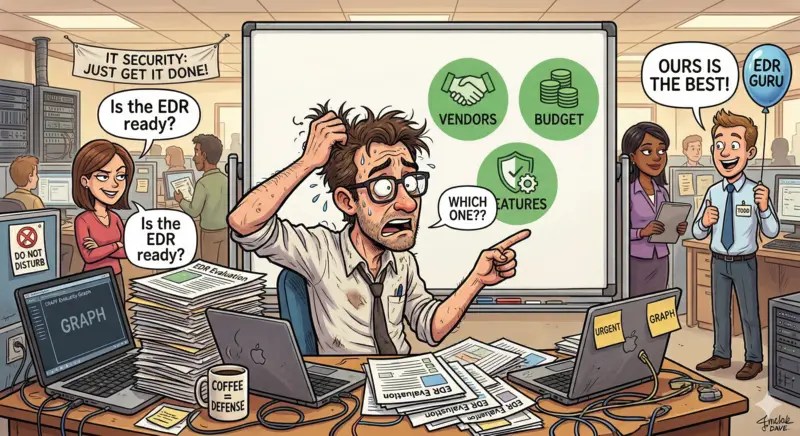
    Enterprise EDR evaluation has a tendency to make smart people feel safe too early.

    The shortlist looks solid. The demos are polished. The proof of value is tidy. Procurement gets neat pricing bands. Security gets detection stories. Everyone gets just enough structure to believe the process is under control.

    Then production happens.

    Now the real costs start walking in. Analyst fatigue. Tuning overhead. Policy exceptions. Response friction. Add-ons that looked optional when the vendor was still smiling on calls.

    That is the part buyers keep underestimating. They think they are evaluating an EDR product. Often, they are really evaluating how convincingly a vendor can stage confidence within a controlled buying cycle.

    And EDR vendors are not stupid. They know exactly how to make a product look calm before your team has to live with it.

    So the buying process starts to behave like procurement theater, with security vocabulary sprinkled on top. The product scores well. The committee feels organized. The approval moves forward. Then six months later, the SOC is carrying the bill in a form nobody modeled properly.

    Most EDR buyer’s guide content will help you compare names. That is the easy part.

    The harder part is spotting the mistakes that make an EDR decision look clean at approval time and heavy after rollout.

    Enterprise EDR Evaluation Starts With the Wrong Test

    You do not lose this decision in rollout first.

    You lose it earlier.

    Right when the vendor starts setting the mood.

    Clean demo. Crisp detections. Neat proof of value. A lot of confidence in the room. Just enough technical depth to make the process feel serious.

    That is how weak evaluation logic hides.

    Your real pain is usually less glamorous. Too many alerts. Slow triage. Weak containment. A messy estate. Policies that nobody wants to touch twice. Analysts are wasting time on work that should have been easier by now.

    If you do not start there, the rest gets performative fast.

    You are not buying applause from a buying committee.

    You are trying to remove a daily irritation your team keeps paying for in time, effort, and attention.

    So test the pain, not the pitch.

    If analyst fatigue is hurting you, look hard at triage flow and alert quality. If containment is clumsy, test response depth. If your environment is uneven, test tuning burden and policy control. If your team is stretched, test how much operational babysitting the product will demand after go-live.

    Plenty of products look sharp when the path is guided.

    Fewer of them stay sharp when your own people have to live inside them.

    That is the filter you need. Not who looks strongest in a controlled sales cycle. Who removes friction once the product becomes your problem?

    Enterprise AI Reviews Are Exposing Ownership Gaps

    Detection Looks Good Until Alerts Start Piling Up

    Detection is the easy part to admire.

    An alert fires. A malicious chain gets mapped nicely. The console looks smart. The demo gets its moment.

    Then real life begins.

    Alerts keep coming. 

    Analysts keep opening, checking, closing, reopening. 

    The same people who were supposed to investigate real risk start burning time sorting junk, duplicates, weak context, and half-useful signals. 

    At that point, strong detection no longer feels like strength. It starts feeling like extra work with better branding.

    That is the part buyers underrate. You are not paying for detection in isolation. You are paying for what happens after detection. 

    How fast can an analyst understand the alert? 

    How much context shows up without manual digging? 

    How often does the product force your team to stitch the story together on its own? 

    A tool that detects more but makes triage slower can still leave you worse off.

    This is why clean evaluation cycles can be misleading. In a controlled test, detection looks like the star. In daily operations, alert handling decides whether the product helps or drains the team. 

    If the queue keeps growing, the nice detection story quickly loses value.

    Llama vs Mistral: Assessing the best local models for privacy of Business Data

    Post-Rollout Tuning Is Where EDR Cost Starts Rising

    Rollout gives buyers a false sense of closure.

    The product is live. The agent is deployed. The dashboard is populated. On paper, the hard part looks done.

    It is not.

    Post rollout is the stage where EDR starts asking for rent in admin time, SOC attention, and constant cleanup. What looked manageable in evaluation can turn irritating very quickly.

    What starts showing up:

    • false positives that need repeated suppression
    • exclusions that keep growing as edge cases surface
    • policies that work in one part of the estate and break in another
    • endpoint groups that need cleaner logic than the original rollout assumed
    • performance complaints from users that force a compromise
    • Exceptions that keep getting patched instead of being designed properly

    None of this looks dramatic in a buying cycle.

    All of it becomes expensive after rollout.

    That is the catch. Base pricing stays the same. The real cost does not. Your team starts paying through hours, interruptions, retesting, and operational babysitting. 

    A product that needs too much post-rollout tuning can turn a decent buying decision into a long cleanup project.

    Proof of Value Can Make a Weak Fit Look Strong

    A proof of value can make you feel smarter than you really are.

    Everything behaves. The scope is clean. The vendor stays close. The product gets shown in the part of the house where the lights work.

    That should make you cautious.

    What you are seeing is not fake. It is filtered.

    Usually filtered by:

    • controlled scope
    • guided workflows
    • selected use cases
    • Vendor support sitting nearby, success criteria that are easier to pass than the daily operations

    So the product starts looking solid before it has done anything difficult.

    That is a bad reason to feel comfortable.

    You do not need a product that behaves well when the vendor is still driving. You need a product that still makes sense when your own team has the wheel, the queue is ugly, and nobody is around to rescue the workflow.

    A weak fit can survive a tidy proof of value.

    Production is less polite.

    CrowdStrike Alternatives for Enterprise: 15 Tools Compared for Cost, Detection, and Control

    Enterprise EDR Evaluation Scorecard

    Detection gets attention because it is easy to show.

    Response is when the product starts to prove whether it is useful or just impressive.

    Many EDR evaluations get stuck on what the platform can detect. Fair enough. But when something serious lands, the better question is much simpler: can your team act fast without turning every incident into a manual project? That is where weak products start showing their teeth.

    Evaluation Area Weight (%) What You Should Check Bad Sign
    Alert handling 25 How quickly an analyst can understand, validate, and move on to an alert Too much digging, weak context, repeated manual work
    Response speed 20 How easily the team can isolate, contain, or take action during an incident Too many steps, too much coordination, slow action path
    Tuning effort 20 How much cleanup, exclusion work, and policy adjustment shows up after rollout Constant babysitting to keep the product usable
    Workflow fit 15 How well the product fits the way your SOC or security team already works Analysts work around the tool instead of through it
    Cost beyond the license 10 Add-ons, admin burden, service dependence, and operating overhead Base price looks fine, but the real running cost does not
    Test honesty 10 Whether the product still looks strong without vendor hand-holding Smooth only in a guided setup

    A product can score well on detection and still drag you down on everything that follows. 

    If the tool slows response, adds cleanup, and keeps the analyst stuck in extra steps, you are not buying relief. 

    You are buying a more expensive version of the same stress.

    Most EDR Buyer’s Guide Content Ignores Operational Friction

    A lot of buyer’s guide content is designed to help you quickly compare vendors.

    That sounds useful.

    It also creates lazy buying behavior.

    You get the usual checklist. Features. Integrations. Pricing tiers. Maybe a few neat pros and cons. Enough structure to build a shortlist. Not enough pressure to expose what will irritate your team after rollout.

    That is the gap.

    An EDR buyer’s guide can help you collect names. It usually does very little to show:

    • How much analyst time does the product keep consuming
    • How much tuning work keeps showing up after go-live
    • How awkward a response feels when the incident is live
    • How much vendor hand-holding was needed to make the product look smooth
    • How quickly does the real cost expand beyond the base license

    So the shortlist starts looking smarter than it is.

    You do not need help finding products.

    You need help ruling out products that create drag.

    That is why a buyer’s guide should never drive the decision on its own. At best, it gives you a starting list. 

    SentinelOne vs Microsoft Defender Scorecard: Which EDR Delivers Better Long-Term Value?

    Base License Pricing Rarely Reflects Real EDR Cost

    Base pricing is the part that buyers can see clearly.

    That is also why it gets too much respect.

    The quote looks neat. The per-endpoint number feels manageable. The discussion becomes easier because everyone can point to a figure and pretend the cost is now understood. It is not. 

    In EDR, the base license is usually the cleanest part of the bill.

    The real expansion starts later.

    Cost Head What Buyers Expect What Usually Happens
    Base license The main cost is covered It only gets the product through the door
    Data retention Standard history is enough More retention starts costing more once investigations get deeper
    Premium modules Optional extras Gaps in daily use start pushing the team toward upgrades
    MDR or premium support Backup option Becomes necessary when the internal team cannot keep up cleanly
    Tuning effort Short stabilization phase Keeps consuming analyst and admin time long after rollout
    False positive cleanup Early rollout issue Turns into a recurring SOC burden
    Policy exceptions Limited to a few edge cases Grows as the estate gets messier
    Performance complaints Rare and manageable Force compromises, exclusions, and more testing
    Internal admin effort Light ownership overhead Becomes ongoing work across policies, groups, and platform hygiene
    Incident response effort The product will reduce effort by default Analysts still lose time in manual steps and coordination

    What this table shows is simple: EDR costs do not usually jump in a single dramatic moment. It spreads. One extra need here, one added dependency there, one more chunk of analyst time nobody modeled properly. That is how a product that looked reasonably priced in procurement starts feeling heavier in operations.

    So the mistake is not just underestimating spend.

    It is underestimating where the spending moves. The buying team approves a visible number. The security team inherits the invisible workload.

    Conclusion

    A clean enterprise EDR evaluation should do one thing well: stop you from buying a product that shifts cost from procurement to operations. That means less attention to polished demos and more to alert load, tuning burden, response friction, and the operating model behind the tool. If those parts remain weak, the product will feel heavier after rollout, even if it looked good in evaluation.

    The real win is not choosing the most impressive platform. It is ruling out the one your team will regret running.

    Also Read: The Straightforward Buyer’s Guide to EDR

  • 5 Best Okta IAM Alternatives for Modern Identity at a Lower Cost

    5 Best Okta IAM Alternatives for Modern Identity at a Lower Cost

    Best Okta IAM alternatives usually come into the picture the same way many expensive software conversations do. Nobody wakes up wanting to replace a known platform. The trigger is smaller at first. 

    A renewal number lands badly. 

    Your team wants a faster rollout, cleaner developer workflows, or a better fit for external identity, and the platform feels heavier than the problem in front of you.

    That is when the search becomes real. Not theoretical. Not market research for its own sake. You are no longer asking whether Okta is a credible platform. 

    You are asking whether it is still the right commercial and operational fit for your next stage. Those are very different questions.

    Some alternatives look cheaper but end up shifting costs to engineering effort, governance gaps, or support weaknesses. Others give you tighter control, faster implementation, and a platform shape that makes more sense for modern identity use cases. That is the tension behind this shortlist. 

    The goal is not to leave a market leader for the romance of change. The goal is to find out whether you are still paying for the right thing.

    When Okta Stops Making Commercial Sense

    Okta stops making commercial sense when a familiar platform starts feeling too expensive for the job it now has to do.

    That shift rarely happens on day one.

    It usually shows up later, when your identity footprint expands, and the next phase starts asking for more users, more integrations, more flexibility, or a better fit for customer-facing use cases. What once felt like a safe enterprise decision is now attracting tougher questions about cost, rollout effort, and overall fit.

    Price is usually the first trigger, but not the only one. 

    In many cases, the bigger issue is platform weight. Your team may want a faster implementation path, greater control over the identity layer, or a setup that better aligns with modern application flows. Once that happens, the discussion stops being about whether Okta is a credible platform. It becomes a more practical question: are you still paying for the right platform shape?

    The point is not to chase the cheapest option to search for the best Okta IAM alternatives. The point is to find a platform that lowers long-term cost without creating new problems elsewhere. 

    A weaker product can save money on paper and still cost you more through engineering effort, support pain, or operational workarounds.

    The strong alternatives are those that reduce costs without changing the operating model. That is the real filter in this category. 

    You are not trying to spend less at any cost. 

    You are trying to stop paying enterprise-platform overhead, when a leaner, better-aligned option may do the job more cleanly.

    Okta Pricing Explained: IAM Licensing, Add-Ons, and Where Costs Escalate

    The Best Okta IAM Alternatives that Give You More for the Money

    The value gap between Okta and the Best Okta IAM Alternatives becomes clear only when cost and ownership are evaluated together.

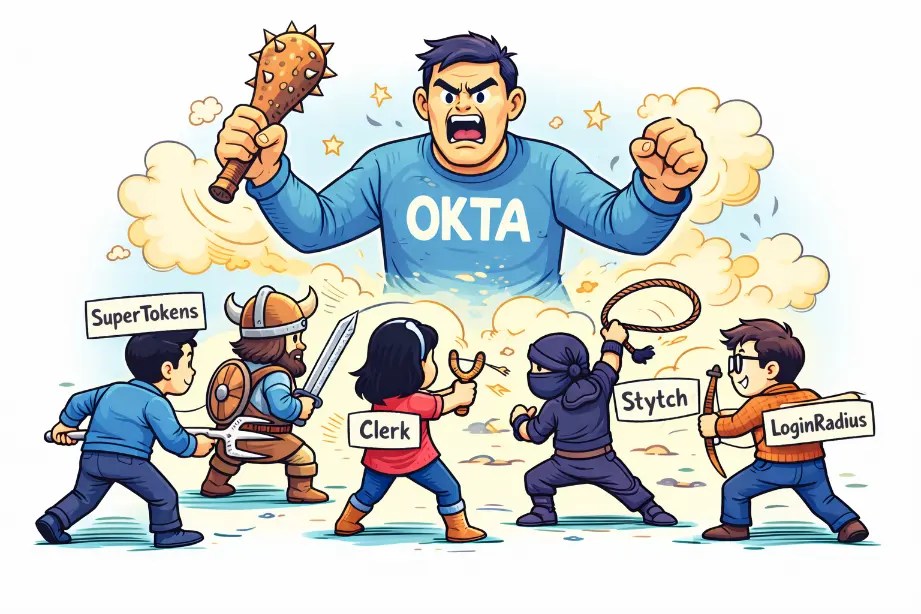
    Stytch gives you more for the money when your priority is modern external identity with less enterprise-platform drag. It makes sense when you want strong capabilities, cleaner product alignment, and a setup that doesn’t feel oversized for the use case.

    Ory gives you more for the money when control matters more than convenience. When they have the technical depth, your team will want to manage IAM themselves rather than rely on the vendor-defined model.

    LoginRadius gives you more for your money when you still want an enterprise-facing CIAM platform but do not want Okta-level commercial weight attached. 

    It is easier to defend when the buying process involves security, architecture, and procurement all in the same room.

    Clerk gives you more for the money when speed matters more than depth. It is attractive because the build path is cleaner and the product experience is polished. The risk is that what feels efficient early on may start to feel narrow later.

    SuperTokens gives you more for the money when cost control is a hard requirement, and your team is comfortable owning more of the implementation burden. 

    That is where it becomes compelling. 

    It cuts platform weight, but it also asks more of you.

    So the answer is not just about price.

    The better question is where you want the burden to sit.

    • Keep paying the vendor to reduce risk and internal effort?
    • Want lower platform cost but more ownership on your side?
    • Or, want faster product delivery even if that means accepting a narrower operating envelope?

    That is where these platforms separate.

    The strongest value play for most buyers will come from the option that removes cost without quietly adding complexity somewhere else.

    Best Okta Alternatives for Enterprise: 7 Identity Platforms Compared for Scale, Cost, and Control

    Where These Platforms Win

    The Best Okta IAM Alternatives do not win for the same reasons. Some platforms win because they reduce platform weight. Others win because they preserve enterprise confidence while trimming costs. 

    The difference matters because not every Okta buyer is trying to solve the same problem.

    The cleaner modern identity play sits with Stytch. It wins where you want strong external identity capability without inheriting the full heaviness of a legacy enterprise buying model. The appeal is not only technical. 

    It is also commercial. 

    You get a platform that feels closer to the way modern products are built and sold.

    The control-heavy position belongs to Ory. It wins when your team cares less about vendor comfort and more about owning the identity architecture properly. That makes it more attractive to technically mature teams that do not want their identity stack boxed in by commercial packaging.

    LoginRadius wins where the decision still has to feel enterprise-safe. It gives you a more familiar CIAM shape, which helps when the shortlist must survive security, architecture, and procurement reviews without looking like a developer-led detour.

    Then there is the speed layer. Clerk wins there. It is easier to like because it removes friction quickly for teams that want momentum and a cleaner build path, which matters a lot.

    SuperTokens wins the moment cost control becomes a serious conversation in the boardroom or budget. It draws attention because it gives you a way to reduce licensing overhead and maintain more control. That is a real advantage, not a side note.

    Okta still wins on one thing the alternatives cannot dismiss: institutional comfort. A familiar platform is easier to defend, renew, and maintain when internal resistance to change is high.

    This is the real shape of the market.

    Stytch wins on modern fit.

    Ory wins on control.

    LoginRadius wins on enterprise-safe replacement value.

    Clerk wins on speed.

    SuperTokens wins on cost pressure.

    Best IAM Solutions for Mid-Size Enterprise: What Actually Works After 500 Employees

    Where These Platforms Break

    The shortlist tightens in a few familiar places. The Best Okta IAM Alternatives also start to converge on the same few failure zones.

    Governance is one. A platform can look clean and efficient early on, then start to feel light once identity becomes a policy, control, and review problem. 

    Clerk can come under pressure there. SuperTokens can too, especially when the expectation is strong control without much operating lift on your side.

    Ownership is another. Lower platform cost often means more responsibility shifts to your team. That trade works well in some environments and poorly in others.

    • Ory fits better when your team wants architectural control and can handle it.
    • SuperTokens fits better when cost pressure is real, and your team is willing to own more of the implementation layer.
    • Both lose some appeal when the expectation is lower, with very little internal effort.

    Internal buying comfort also changes the shortlist. A platform may look strong in a technical review but still face resistance once security, architecture, procurement, and business stakeholders weigh in.

    • LoginRadius is easier to carry through a conservative enterprise cycle.
    • Stytch can still hold up well, but the internal case needs to be clearer.
    • Clerk and SuperTokens may face more hesitation in risk-averse environments.

    Speed can also mislead. A platform that feels easy in the first phase may not feel as comfortable once extensibility, non-standard requirements, and long-term operating depth become more important.

    Some platforms reduce spend. Some reduce friction. Very few do both equally well.

    Azure Entra Alternatives: Which IAM Platform Fits Better for B2B SaaS?

    Pricing and Long-Term Cost Reality

    Okta gets expensive in a familiar way. 

    The initial decision may look defensible, but the long-term cost becomes harder to justify as usage grows, more identity scenarios arise, or the team needs more flexibility than the original scope allowed. 

    A known platform can remain in place for a long time due to internal comfort. That does not make the commercial model efficient.

    The alternatives break into different cost shapes.

    • Stytch works when you want a modern external identity without carrying the full weight of an enterprise platform.
    • Ory looks stronger when license control and architectural ownership matter more than vendor-managed convenience.
    • SuperTokens gets attractive when cost pressure is high, and your team is willing to own more of the implementation layer.
    • LoginRadius stays closer to the enterprise CIAM buying model, making the spend easier to defend internally.
    • Clerk looks efficient early, but only if the platform still fits as requirements get heavier.

    Price alone does not settle this category. Identity cost shows up in three places: platform cost, implementation cost, and ongoing operating cost.

    A lower-priced platform can still become expensive if it requires engineering effort, relies on support, or relies on a workaround-heavy delivery. A higher-priced platform can still make sense if it removes enough internal burden.

    That is the commercial test. Cost reduction only matters when it does not create a second problem in delivery, governance, or operations.

    Okta vs Ping Identity Comparison: Buyer Guide for Enterprise Identity Strategy

    Weighted Scoring Framework to Judge Okta Alternatives

    A framework matters because the Best Okta IAM Alternatives do not separate on features alone. These platforms differ in cost, control, rollout effort, governance depth, and the balance of burden between the vendor and your team. A weighted view makes that easier to judge.

    Criterion Why It Matters Weight SuperTokens Ory Clerk Stytch LoginRadius Top Performer
    Core Identity Capability Shows whether the platform can handle serious IAM and CIAM needs without creating gaps later. 3x 3 4 3 4 4 Stytch
    Governance and Security Depth Matters once identity becomes a control, compliance, and review issue. 3x 3 4 3 4 4 LoginRadius
    Integration Flexibility Shows how well the platform fits your stack and non-standard identity requirements. 3x 4 5 3 4 4 Ory
    Implementation Speed Impacts time to value and how quickly your team can move from decision to rollout. 2x 3 3 5 4 3 Clerk
    Admin Overhead Affects how much ongoing effort your team spends managing identity after go-live. 2x 3 3 4 4 3 Stytch
    Long-Term Cost Separates lower license cost from true commercial efficiency over time. 3x 5 4 4 4 3 SuperTokens
    Scalability Shows whether the platform can hold up as usage, integrations, and governance demands expand. 2x 3 4 3 4 4 LoginRadius
    Enterprise Buying Comfort Matters when security, architecture, procurement, and business stakeholders all influence the decision. 2x 2 3 3 4 4 LoginRadius
    Total Weighted Score Sum of score × weight across all criteria. – 58 69 61 72 67 Stytch

    How to read the scores

    • Each platform is scored on a 1–5 scale across the criteria listed in the table.
    • Each criterion is then multiplied by its assigned weight to reflect buying importance.
    • The criteria focus on what usually decides IAM platform selection in practice: capability, governance, integration fit, rollout speed, admin load, long-term cost, scalability, and enterprise buying comfort.
    • Higher totals do not mean a platform is universally better. They mean it holds up better against this specific decision lens.

    Which Platform Should You Choose

    • Choose Stytch when you want the best overall balance of modern identity capability, faster rollout, and lower long-term platform weight.
    • Choose Ory when control, flexibility, and architectural ownership matter more than convenience.
    • Choose LoginRadius when you want a more enterprise-shaped CIAM replacement that is easier to defend internally.
    • Choose Clerk when speed, developer experience, and fast product delivery matter most.
    • Choose SuperTokens when cost pressure is high, and your team is comfortable owning more of the implementation layer.
    • Stay with Okta when governance depth, scale, confidence, and enterprise buying comfort matter more than cost reduction.

    IAM Pricing Models Explained: Per User vs Tiered vs Enterprise Plans

    Final Recommendation

    Among the Best Okta IAM Alternatives, Stytch comes out strongest overall.

    It gives you the cleanest balance of capability, speed, and long-term commercial sense without dragging the full weight of an Okta-style platform model.

    Ory is the better choice when control matters more than convenience.

    LoginRadius is the safer replacement path when the decision needs to feel more enterprise-familiar.

    Clerk is the speed play.

    SuperTokens is the cost play.

    Okta remains the better call when your environment puts the highest value on governance depth, scale, confidence, and internal buying comfort.

    So the decision is fairly clear. Pick:

    • Stytch for the strongest all-around alternative
    • Ory for control
    • LoginRadius for enterprise-safe replacement
    • Clerk for speed
    • SuperTokens for cost
    • Stay with Okta when platform risk matters more than platform weight.
  • SentinelOne vs Microsoft Defender Scorecard: Which EDR Delivers Better Long-Term Value?

    SentinelOne vs Microsoft Defender Scorecard: Which EDR Delivers Better Long-Term Value?

    Comparing SentinelOne vs Microsoft Defender becomes a bad decision the moment you start judging it by surface logic.

    SentinelOne looks attractive because it feels like a clean security buy. Microsoft Defender starts pulling attention because someone in the room will say, “We are already paying Microsoft.” Both arguments sound smart. Both can mislead you.

    This is not just a product comparison. It is a budget trap, an operations decision, and a platform bet sitting inside one purchase. One option can look cheaper before rollout and heavier after rollout. The other can look expensive at first and cleaner once your team has to live inside it.

    That is the tension. You are not choosing between two demo stories. You are choosing between two long-term operating models.

    And that is exactly where this comparison has to be ruthless.

    Let’s cut the setup fluff and find out the real buying conflict.

    Quick Verdict: The Duel of EDRs

    Microsoft Defender wins if your long-term cost equation is tied to broader Microsoft leverage and you are willing to operate inside that gravity.

    SentinelOne wins if you want the cleaner standalone EDR experience, faster operational clarity, and less dependence on how well the rest of your Microsoft security stack is configured, licensed, and managed.

    That is the split.

    If you are judging this as a pure product fight, SentinelOne often feels sharper. It is easier to admire because the value proposition is more direct. Buy the platform, deploy it, run it. The story is cleaner.

    But if you are judging this as a long-term commercial decision, Microsoft Defender becomes very hard to ignore. 

    Not because it is always the better product in isolation. Because it can become the better financial decision once your broader Microsoft footprint starts absorbing part of the security spend you would otherwise carry separately.

    That does not make Defender the automatic winner.

    It makes Defender the winner only if your team can turn Microsoft proximity into operational advantage instead of operational clutter.

    If not, SentinelOne can still be the smarter buy. 

    A tool that costs more on paper can still cost less in real life when your team spends less time managing complexity around it.

    Decision Area SentinelOne Microsoft Defender Who Wins
    Core EDR Experience Focused, standalone, security-first. Broader, but tied to the Microsoft security stack. SentinelOne
    Detection and Response Strong behavioral detection and fast response. Strong detection with broader cross-platform signal correlation. Microsoft Defender
    Deployment Cleaner rollout as a dedicated EDR platform. Smoother in Microsoft-led estates, less clean in mixed stacks. SentinelOne
    Daily Operations Simpler console flow and clearer day-to-day handling. Powerful, but depends more on surrounding Microsoft setup. SentinelOne
    Multi-Vendor Fit Fits mixed environments more naturally. Works best when more of your stack is already Microsoft. SentinelOne
    Reporting and Visibility Strong endpoint-focused visibility. Broader visibility across the Microsoft security ecosystem. Microsoft Defender
    Admin Overhead Lower operational friction for a leaner security workflow. Can be efficient, but only in a well-managed Microsoft estate. SentinelOne
    Long-Term Cost Clearer standalone spend, but less bundling advantage. Stronger long-term value when licensing overlap is real. Microsoft Defender
    Best Fit Teams wanting focused EDR with less ecosystem dependence. Teams wanting to extract more value from Microsoft alignment. Depends on model

    What Decides This EDR Purchase

    This decision starts going wrong when buyers lock onto product talking points too early.

    SentinelOne starts sounding sharper because the product story is cleaner. Microsoft Defender starts sounding cheaper because Microsoft is already somewhere in the environment. That is how bad comparisons begin.

    The real decision sits underneath that noise.

    You need to decide whether the priority is a cleaner standalone EDR platform or endpoint security tied more tightly to a broader Microsoft relationship. That is the split that matters. Not the demo. Not the first pricing impression. Not the comfort of a familiar vendor name.

    Then comes cost reality.

    Not proposal cost. Not year-one optics. Real cost. The kind that shows up after rollout, when licensing boundaries, feature access, admin effort, and workflow complexity become impossible to ignore. A lower buying price can still leave you with a heavier operating model.

    Then comes daily friction.

    A platform does not become expensive only through licensing. A platform becomes expensive when the security team spends more time managing it, tuning it, navigating it, or working around it. That cost rarely appears cleanly during evaluation. It still lands on your side.

    Then there is stack behavior.

    In a mixed environment, some products stay cleaner outside their home ecosystem. Others become more valuable only when the rest of the estate starts leaning in the same direction. That difference matters because vendor strength and operational fit are not the same thing.

    So that is the real test here.

    Which option gives you strong protection, lower drag, and a cost structure that still feels sensible once the buying optimism is gone?

    Which product still looks like the right decision after rollout, when protection quality, operating effort, and real cost all become visible?

    AI-Powered Cybersecurity Platforms: What to Buy, Reject, or Fix First

    Protection Depth and Detection Confidence

    This is where Microsoft Defender starts pushing back hard.

    SentinelOne is easy to like because the protection story feels clean. Strong behavioral detection. Strong response posture. A platform that feels built to do this job first, not as part of a wider bundle. That clarity matters during evaluation because it is easier to see what you are buying.

    Microsoft Defender is stronger when you value detection in context, not just detection at the endpoint. The more useful question is not whether Defender can detect. It can. The real question is whether broader signal correlation gives your team a better response position. In many environments, that answer is yes.

    That is the Defender advantage. Endpoint telemetry does not have to stay isolated. Defender becomes more powerful when endpoint activity is seen alongside identity, email, cloud, and broader Microsoft security signals. That can improve investigation quality and reduce blind spots that a narrower endpoint view may miss.

    SentinelOne still holds real ground here.

    A cleaner product often leads to cleaner analyst action. Fast understanding has value. Focus has value. 

    A platform does not need to be broader to be effective if the security team can move quickly and confidently inside it. That is one reason SentinelOne continues to appeal to buyers who want sharp EDR execution without carrying platform weight around it.

    So who wins this section?

    If the priority is a focused endpoint protection experience with strong direct response flow, SentinelOne stays very compelling. 

    If the priority is broader detection context and stronger cross-domain visibility, Microsoft Defender takes the edge.

    Microsoft Defender wins on detection depth. Not because SentinelOne is weak. Because broader context can become a serious advantage once incidents stop being neat endpoint-only events.

    CrowdStrike Alternatives for Enterprise: 15 Tools Compared for Cost, Detection, and Control

    Deployment Friction and Time to Value

    This is where SentinelOne starts looking like the easier buy.

    A focused EDR rollout is easier to control when the product stands on its own feet. SentinelOne benefits from that. The deployment story is easier to explain, easier to stage, and easier to evaluate without dragging the rest of the security estate into the room.

    Microsoft Defender can still move fast, but speed depends more on surrounding conditions. Existing Microsoft licensing helps. 

    Existing policy maturity helps. Existing security alignment helps. When those pieces are already in place, Defender can feel efficient. When those pieces are patchy, the rollout starts feeling less like a product deployment and more like an ecosystem exercise.

    That difference matters.

    A clean deployment is not just about how quickly the agent lands. A clean deployment is about how quickly your team gets to confidence. 

    Policy behavior, exclusions, alert flow, admin clarity, reporting logic, and ownership boundaries all shape time to value. 

    SentinelOne has the advantage when you want that path to be more direct.

    Microsoft Defender has the advantage only when the environment is already prepared to support that direction. Without that readiness, the rollout can look cheaper on paper and slower in practice.

    So this section goes to SentinelOne.

    Not because Defender is hard to deploy in every case. Because SentinelOne asks for less environmental cooperation before it starts feeling operationally settled.

    Daily Operations and Admin Overhead

    A lot of security products look fine until the team has to live in them.

    That is where SentinelOne makes a strong case. The platform feels more direct. Less wandering. Less ecosystem weight. Less of that quiet operational fatigue that builds when a tool keeps asking the team to think beyond the job in front of them.

    Microsoft Defender is not weak here. But Microsoft Defender is one of those products that gets easier the more the rest of the Microsoft estate is already behaving. 

    When that alignment exists, the platform can feel efficient. When that alignment does not exist, daily work starts picking up extra steps, extra dependencies, and extra explanation.

    That is the issue.

    Admin overhead is not just about policy screens and console clicks. Admin overhead is about how much surrounding structure a product demands before it starts feeling clean. SentinelOne asks for less. 

    Microsoft Defender can give you more, but it also asks more often: more alignment, more ecosystem familiarity, more readiness around it.

    For a buyer thinking about long-term cost, that difference matters. A broader platform can still be the right financial decision. But a broader platform is not automatically the lighter one to run.

    So this section goes to SentinelOne.

    SentinelOne feels easier to carry. Microsoft Defender can absolutely pay off, but only when the wider Microsoft setup is already pulling in the same direction.

    EDR Solutions for Mid-Size Enterprise: The Buying Guide Vendors Won’t Give You

    Integration Fit in a Multi-Vendor Stack

    This is where Microsoft Defender starts losing some of its financial shine.

    On paper, Defender can look like the smarter long-term cost decision because Microsoft already has commercial gravity in the environment. In practice, that advantage becomes less clean in a multi-vendor stack. 

    The more mixed the estate, the harder it is to turn Microsoft adjacency into pure operating efficiency.

    That does not mean Defender stops being strong. It means the conditions for winning get tighter.

    SentinelOne fits a mixed environment more naturally. The product does not keep hinting that life would be better if the rest of the stack moved in the same direction. That matters because a multi-vendor environment is already carrying enough friction. 

    A security team does not need the EDR layer quietly adding more.

    Microsoft Defender still brings real integration depth. But the full weight of that advantage shows up best when Microsoft is not just present, but structurally central. Without that pull, part of the integration story remains more theoretical than practical.

    This is where buyers need to stay honest. A platform can be strong and still be a less natural fit. Those are not contradictions. They are normal enterprise buying realities.

    So this section goes to SentinelOne.

    SentinelOne fits the stack you already have. Microsoft Defender gets stronger when the stack starts looking more like the stack Microsoft wants.

    How to Choose Managed Cyber Security Services (MSSP) in 2026

    SentinelOne vs Microsoft Defender Pricing, Licensing, and Long-Term Cost Reality

    SentinelOne keeps the buying logic cleaner

    • Standalone pricing is easier to understand
    • Security spend stays visible
    • Product value is easier to map to security outcomes
    • Cost creep is easier to spot

    Microsoft Defender gets stronger when Microsoft is already deep in the estate

    • Existing licensing can absorb part of the EDR cost
    • Consolidation value becomes easier to argue internally
    • Broader Microsoft overlap can reduce separate tool spend
    • Long-term savings improve when the wider stack is already being used properly

    SentinelOne reduces commercial guesswork

    • Less dependence on broader platform maturity
    • Fewer assumptions needed to defend the purchase
    • Cleaner fit in a mixed-vendor environment
    • Lower risk of hidden operating drag

    Microsoft Defender can create stronger long-term savings

    • Existing Microsoft contracts already carry weight
    • Consolidation is a real operating goal
    • The security team can use the wider Microsoft stack properly
    • Platform overlap is strong enough to reduce duplicate spend

    Where buyers get trapped

    • Treating bundled value as automatic savings
    • Mistaking vendor gravity for operating efficiency
    • Underestimating the effort needed to unlock platform value
    • Looking at entry pricing and calling it long-term cost

    Section verdict

    • SentinelOne wins on cost clarity
    • Microsoft Defender wins on long-term cost upside

    Weighted Scoring: SentinelOne vs Microsoft Defender

    A weighted score helps here because this comparison can get biased very quickly.

    SentinelOne is easier to like. Microsoft Defender is easier to justify. Those are not the same thing.

    So the scoring needs to reflect the buying priority you set: long-term cost.

    Scoring framework

    Criterion Why It Matters Weight SentinelOne Score Microsoft Defender Score Weighted Score SentinelOne Weighted Score Microsoft Defender Winner
    Core protection capability Baseline protection strength still carries the whole decision. 3x 4 4 12 12 Draw
    Detection and response depth Broader signal context improves investigation and response quality. 3x 4 5 12 15 Microsoft Defender
    Ease of deployment Cleaner rollout means faster value and less implementation drag. 2x 5 3 10 6 SentinelOne
    Daily operations Lower day-to-day friction reduces hidden staffing cost. 2x 5 3 10 6 SentinelOne
    Admin overhead Extra admin effort quietly increases long-term cost. 3x 5 3 15 9 SentinelOne
    Multi-vendor fit Mixed estates punish tools that depend on one ecosystem. 3x 5 3 15 9 SentinelOne
    Reporting and visibility Stronger visibility improves control and investigation quality. 2x 4 5 8 10 Microsoft Defender
    Security and governance fit Policy control and governance matter as the deployment matures. 2x 4 4 8 8 Draw
    Scalability What works early should still work cleanly at broader scale. 2x 4 4 8 8 Draw
    Support and commercial confidence Support quality affects operational trust during pressure moments. 1x 4 4 4 4 Draw
    Pricing structure Clearer pricing reduces buying confusion and surprise expansion. 2x 5 3 10 6 SentinelOne
    Long-term cost reality Year-two and year-three economics matter more than entry optics. 3x 3 5 9 15 Microsoft Defender
    Total Overall weighted score – – – 121 108 SentinelOne

    What the score is saying

    The score does something useful here.

    It shows why Microsoft Defender keeps pulling attention in commercial discussions, but it also shows why SentinelOne still comes out stronger for this exact operating setup.

    Microsoft Defender wins where platform breadth and long-term Microsoft leverage matter most.

    SentinelOne wins where daily reality hurts more: rollout effort, admin burden, mixed-stack fit, and operational simplicity.

    Score Card

    The weighted score gives SentinelOne the overall lead.

    That does NOT mean Microsoft Defender loses the long-term cost argument in every environment.

    It means that in a mid-market, multi-vendor stack, Microsoft Defender needs more environmental alignment before that cost advantage turns fully real.

    Who Should Choose SentinelOne

    Choose SentinelOne if your buying logic looks like this:

    • Want a cleaner standalone EDR decision
    • Do not want endpoint security value tied too tightly to Microsoft alignment
    • Operate a mixed-vendor stack and want the EDR layer to stay neutral
    • Care about lower day-to-day friction for the security team
    • You want faster operational clarity after rollout
    • You would rather pay for a focused security platform than unlock value through broader platform dependency
    • Want cost clarity, even if the headline long-term savings case looks less dramatic

    SentinelOne is the better fit when simplicity has real value in your environment.

    Not “simple” in the lightweight sense. Simple in the expensive sense. Fewer moving parts. Less explanation. Less platform drag. Less risk that the team spends the next year proving the buying logic was right.

    Who Should Choose Microsoft Defender

    Choose Microsoft Defender if your buying logic looks like this:

    • Microsoft already has meaningful commercial weight in the environment
    • You want endpoint protection to sit inside a broader Microsoft security model
    • You are actively trying to consolidate security tooling
    • The team can operationalise Microsoft security depth properly
    • Broader signal correlation matters more than standalone EDR neatness
    • You are willing to accept a heavier operating model in exchange for stronger platform leverage
    • Long-term cost matters more than having the cleanest standalone product story

    Microsoft Defender is the better fit when the Microsoft footprint is strong enough to turn bundling, overlap, and consolidation into real savings.

    That is the key condition.

    Without that condition, Defender can still be strong technically and still be the less natural commercial fit.

    Conclusion: The Better Buy

    In SentinelOne vs Microsoft Defender comparison, SentinelOne is the better buy for a mid-market, multi-vendor setup with long-term cost in focus.

    The reason is not product glamour. The reason is operating fit.

    SentinelOne asks for less surrounding alignment. The rollout is cleaner. Daily handling is lighter. The fit is more natural in a mixed-vendor environment. That matters because long-term cost is not decided by licensing alone. Long-term cost is decided by how much drag the product carries after rollout.

    Microsoft Defender is still a serious contender. In some environments, Microsoft Defender can absolutely become the smarter financial decision. That happens when Microsoft licensing already carries real weight, security consolidation is a real operating objective, and the team is ready to use the wider Microsoft security stack properly.

    But that is not the cleanest reading for this setup.

    In this setup, Microsoft Defender needs more environmental support before the commercial upside turns fully convincing. SentinelOne does not.

    So the decision is straightforward:

    • Choose SentinelOne if you want a cleaner standalone EDR platform, lower daily drag, and a better fit in a mixed stack.
    • Choose Microsoft Defender if Microsoft is already deep enough in the environment to turn bundling and consolidation into real savings.

    SentinelOne is the stronger overall choice.

    Also read: Gartner Comparison of SentinelOne vs Microsoft Defender

  • AI-Powered Cybersecurity Platforms: What to Buy, Reject, or Fix First

    AI-Powered Cybersecurity Platforms: What to Buy, Reject, or Fix First

    AI-powered cybersecurity platforms are being sold as relief for overworked security teams. Faster triage. Smarter investigation. Fewer analysts are buried under repetitive work. That promise sounds timely because most SOCs already have too many tools, too many alerts, and too little time.

    The trouble starts when the platform leaves the demo and lands in a real environment. Bad telemetry, weak integrations, poor response automation, and noisy controls do not disappear because an AI layer sits on top. In many cases, the platform does not reduce effort. It adds one more system to review, tune, and justify.

    That is the split in this market. Some products remove real analyst work. Some just repackage existing noise with better language and a more polished console. If you are evaluating AI-powered cybersecurity platforms, the decision is not about who has the smartest model. It is about what to buy, what to reject, and what to fix first before the platform becomes another expensive operational burden.

    Where AI-powered cybersecurity platforms break first

    AI-powered cybersecurity platforms usually fail at the point where the signal is supposed to turn into action.

    A vendor shows faster triage, cleaner correlation, stronger summaries, and better prioritization. 

    Fine. 

    None of that buys you much if your analysts still have to slow down, re-check the output, pull context from other systems, and escalate through the same old path. In that situation, the platform is not taking pressure off the workflow. 

    It is inserting itself into the workflow and demanding trust.

    That is how buyers get misled.

    The console looks sharper. The incident narrative reads better. The signal looks more organized. Underneath, your team may still be doing the same labor. 

    Validation stays. 

    Enrichment stays. 

    Second-guessing stays. 

    Tool-hopping stays. 

    The platform helps interpret the problem, but the burden of deciding and acting still sits with your people.

    Another failure point shows up in the data layer.

    If your telemetry is patchy, your identity context is incomplete, your asset picture is unreliable, or your detections are already noisy, the AI layer does not rescue any of that. It absorbs the same weak inputs and produces more polished uncertainty. 

    Now the problem is not just noise.

     It is noise that sounds more convincing because the machine has wrapped it in cleaner language and stronger-looking confidence.

    That creates a different kind of drag.

    Analysts hesitate longer around output that looks authoritative. Bad raw alerts are easier to distrust. Bad machine-shaped output often gets more attention than it deserves, which means review time expands instead of shrinking. 

    The promise was speed. The result can be slower human judgment wrapped in a smarter interface.

    So strip the pitch down to one hard test.

    What specific piece of work leaves your team’s plate if this platform goes live?

    Not visibility.
    Not intelligence.
    Not efficiency.

    Work.

    First-level triage. Manual enrichment. Investigation time. Escalation back-and-forth. Response delay. Pick the step and name it clearly. 

    If nobody can describe that reduction in one line, the platform is already entering your environment as another layer to manage.

    This category breaks early when four conditions show up together: weak telemetry, low trust, added review overhead, and shallow response impact. 

    Once that combination appears, you are no longer looking at operational relief. 

    You are looking at a smarter-looking source of security drag.

    What your environment needs before AI is worth buying

    You do not start with the platform. You start with the environment it has to survive.

    If your telemetry is inconsistent, the AI will inherit the inconsistency. If your asset inventory is stale, the platform will make decisions on stale context. If identity signals are fragmented across IAM, endpoint, cloud, email, and network layers, the AI will still produce output, but the quality of that output will swing harder than the demo ever suggested.

    This is where a lot of security teams lose discipline. They evaluate the product as if it will compensate for environmental weakness. Usually, it does not. It amplifies the cost of that weakness because now you are paying a premium to process bad inputs faster.

    So before you buy anything, check the basics that vendors like to skip past:

    • Can you trust your core telemetry sources?
    • Can you map users, assets, endpoints, and cloud activity with enough consistency to investigate fast?
    • Can your detections feed the platform without flooding it with garbage?
    • Can your team act from the platform without stitching together five other consoles?
    • Can you measure whether analyst effort dropped after deployment?

    Miss two or three of those, and your AI project starts life as an integration project.

    That matters because AI-powered cybersecurity platforms are rarely cheap in operational terms. 

    Even when licensing looks manageable, the real cost starts showing up in data cleanup, rule tuning, workflow redesign, connector maintenance, and trust-building inside the SOC. 

    If your environment is immature, the platform does not land as acceleration. It lands as a new dependency.

    You do not need perfection before AI helps. You do need enough structure for the platform to do more than summarize chaos.

    A good readiness test is simple. Ask whether your team can already answer basic incident questions without wasting time:

    • What asset is involved
    • Who owns it
    • What identity touched it
    • What else happened around it
    • What control can contain it

    If those answers still take too long, AI may make the investigation sound cleaner without making it move faster.

    This is the buying reality. 

    The platform earns its place only after your environment crosses a minimum usefulness threshold. Below that line, you are not buying intelligence. You are funding the cleanup that your stack should have gone through earlier.

    If the vendor leads with summaries instead of telemetry, integrations, and response, the demo is stronger than the product.

    Which security bottlenecks are worth solving with AI

    Not every security problem deserves an AI platform.

    Some problems are good AI candidates. Some are not. If you do not separate the two early, you end up buying intelligence for a problem that is really caused by ownership gaps, poor execution, or bad process design.

    Start with the bottlenecks where analysts are doing too much repetitive judgment.

    That usually includes:

    • First-pass alert triage
    • Repetitive enrichment
    • Stitching together incident context
    • Ranking large volumes of findings
    • Pushing low-level investigation work upward because the first layer is overloaded

    These are good candidates because the work is repetitive, the inputs are usually structured enough, and the value shows up in time saved. 

    If your analysts keep spending hours deciding which alerts deserve attention or pulling the same context from the same tools again and again, AI can help because it is attacking labor, not theory.

    Now look at the other category.

    If your main problem is slow containment, broken response ownership, weak playbooks, poor integrations, or endless back-and-forth between security and IT, AI is not your first fix. 

    In that situation, the bottleneck is not judgment. The bottleneck is execution.

    That distinction matters.

    A platform may tell you faster that something is wrong. Fine. But if your team still cannot isolate the endpoint, disable the identity, block the session, or push the case through the right response path without delay, then the platform has improved awareness without improving control.

    That is a weak return.

    So the decision rule is simple: use AI where the work is repetitive and expensive. Do not start where the real problem is, process friction.

    Here is the practical split:

    • If your analysts are buried in repetitive alert review, AI is worth testing
    • If your team wastes time pulling context from multiple tools, AI is worth testing
    • If your queue is too large and prioritization is weak, AI is worth testing
    • If incidents drag because response ownership is unclear, fix the workflow first
    • If escalation chains are messy, fix the workflow first
    • If response actions are still manual and disconnected, fix the workflow first

    This is what buyers often miss. They buy for the most visible pain, not the most solvable pain.

    The most visible pain may be “too many incidents.” The solvable pain may be “too much manual triage.”

    Those are not the same thing.

    You should only target a bottleneck with AI if four things are true:

    • The work happens often
    • The decision pattern repeats
    • The system has enough usable data
    • There is a path from output to action

    Miss one of those, and the value starts collapsing.

    So do not ask where AI sounds impressive. Ask where it can remove ugly, recurring work without waiting for your whole operating model to improve first.

    Where AI cuts analyst labor and where it quietly adds more work

    Use Case Labor Reduction Trust Need Review Overhead Risk Decision
    Repetitive Enrichment High Medium Low Buy
    Alert Triage High High High Buy Selectively
    Finding Prioritization Medium-High High High Buy Selectively
    Incident Summarization Medium Low Medium Support Only
    Investigation Guidance Medium High High Delay
    Response Recommendations Low-Medium Very High High Reject

    Interpretation: 

    • Start with enrichment because it removes ugly manual work with lower trust risk.
    • Be careful with triage and prioritization because the upside is high, but review overhead rises fast when analysts do not trust the output.
    • Treat summarization as a support value, not a core value, because it improves readability more than workload.
    • Delay guidance-heavy layers until override rates are low and the team trusts the platform.
    • Reject response recommendations as a lead buying reason if your response path is still mostly manual.

    What gets more expensive after deployment

    The contract is only the starting cost.

    The real cost starts after go-live, when your team has to make the platform usable in day-to-day operations.

    That is where the budget line starts spreading:

    • integrations need upkeep
    • detections need tuning
    • Analysts need retraining
    • Workflows need adjustment
    • AI output needs validation
    • The overlap with existing tools needs sorting

    This is the part that many buyers undercount.

    The platform may look efficient on paper, but if your analysts keep double-checking its output, your engineers keep fixing connectors, and your SOC keeps working across the old tools anyway, the platform is not reducing effort. It is creating a second layer of operating work.

    That is why post-deployment cost matters more than license cost.

    A bad platform makes three things heavier:

    • daily operations
    • internal trust
    • stack complexity

    You feel it quickly. Adoption slows. Usage becomes uneven. Teams fall back to old workflows. The product stays live, but the value stays partial.

    The cost problem gets worse when the platform overlaps with tools you already have. SIEM, EDR, SOAR, email security, cloud tooling, case management. If the AI layer does not remove work from any of them, then it is not simplifying the stack. It is adding one more system to feed, tune, and justify.

    So do not ask only, “What will this platform cost?”

    Ask two harder questions:

    • What new operating work will this create?
    • What old operating work will this remove?

    If the first answer is stronger than the second, the economics are already turning against you.

    A platform becomes expensive when it adds operating work faster than it removes analyst work.

    Which AI-Powered Cybersecurity Platforms are shaping the shortlist

    Not all AI-powered cybersecurity platforms are trying to solve the same problem. Some are really XDR-led platforms trying to reduce triage and investigation drag. Some are copilot-style layers designed to sit on top of an existing stack. Some lean harder on anomaly detection and behavioral analysis. If you mix those buying paths together, the shortlist gets sloppy fast.

    Platform What It Really Is Best Fit Where It Breaks First Operator Take
    CrowdStrike Falcon Endpoint-heavy detection and response platform with broader XDR ambitions Teams that want strong endpoint-led visibility and faster investigation flow Gets less convincing when buyers expect it to solve wider workflow and control fragmentation on its own Strong shortlist candidate when endpoint telemetry sits at the center of the security operation
    Cortex XDR / XSIAM Broader SOC workflow play with AI, analytics, and consolidation appeal Buyers trying to reduce analyst drag across a wider operations layer Can become heavy when the environment is not ready for workflow standardization and tool consolidation Worth serious attention when the goal is fewer handoffs, not just better alerts
    Trend Vision One XDR-oriented platform pushing centralized visibility and response Teams looking for broad security visibility without relying on a pure copilot story Value weakens when the team mainly needs deep workflow reduction rather than broad platform coverage Good fit when cross-domain visibility matters more than aggressive workflow compression
    Darktrace AI-heavy anomaly and behavioral detection play Teams that value unusual-activity detection and broader behavioral coverage Can disappoint when the buyer expects measurable workload reduction instead of stronger anomaly surfacing Shortlist it when the buying trigger is detection depth, not workflow compression
    Microsoft Sentinel + Security Copilot SIEM plus copilot layer sitting inside a broader Microsoft security stack Microsoft-heavy environments that want AI assistance close to existing analyst workflows Gets less attractive when the buyer is not already deep in Microsoft security and integration gravity Makes most sense as a stack-leverage decision, not as a standalone AI story
    SentinelOne Endpoint/XDR-led platform with strong AI positioning around threat detection and response Buyers who want a strong endpoint-first option in the AI security conversation Can be overbought when the real bottleneck sits in response ownership and process, not endpoint analysis Credible option when endpoint speed matters more than broad SOC redesign

    Buying faster detection will not fix slow containment

    Faster detection sounds valuable. Sometimes it is. But if containment still moves slowly, the gain is smaller than it looks.

    That is the gap many platforms hide.

    You may detect the threat earlier, group the signals faster, and surface the likely issue in cleaner language. Fine. If your team still cannot isolate the endpoint, disable the identity, block the session, or move the case through the right response path without delay, the security outcome barely improves enough.

    The bottleneck was never detection alone.

    In many environments, the signal already arrives fast enough. The drag starts after that. Manual approvals. Weak playbooks. Disconnected controls. Too many handoffs between SOC, IT, cloud, and identity teams. Slow decisions at that stage wipe out a lot of the value from earlier detection.

    So do not buy on speed alone.

    Buy when the platform helps compress the path from alert to containment. Delay mostly gives you a faster way to understand the same problem, while your response path stays slow.

    That is the real distinction.

    A faster alert is useful. A faster containment path is valuable.

    If the second one does not improve, do not overrate the first.


    CrowdStrike vs SentinelOne EDR comparison: A Buyer’s View on Cost and Complexity

    When AI-powered cybersecurity platforms should not be pursued

    Do not shortlist AI-powered cybersecurity platforms when the platform is being used to cover up weak operations instead of solving a clear, specific bottleneck. If your environment is still noisy, your response path is still slow, and your team is unlikely to trust the output enough to remove steps from the workflow, the platform will add overhead before it adds value.

    Do not shortlist it if:

    • The bottleneck is still vague
    • The telemetry quality is poor
    • detections are already noisy
    • Analysts are unlikely to trust the output
    • The response is still mostly manual
    • The tool overlap is already high
    • The vendor cannot name which workflow step will disappear
    • The value depends on future maturity rather than current operating conditions

    Delay the purchase when two or more of these are true.


    EDR Solutions for Mid-Size Enterprise: The Buying Guide Vendors Won’t Give You

    How polished demos hide weak cybersecurity platforms

    Polished demos make AI-powered cybersecurity platforms look cleaner, faster, and smarter than they usually feel in production. The reason is simple: demos remove the mess. Clean telemetry. Clean workflows. Clean decisions. Your environment will not.

    Push harder when the demo shows:

    • unusually clean incident narratives
    • highly confident prioritization with little explanation
    • strong recommendations without showing response dependencies
    • smooth analyst workflows without exception handling
    • broad AI coverage claims without showing data assumptions
    • fast outcomes without showing the integration load underneath

    Ask direct questions:

    • What happens when telemetry is incomplete
    • How often do analysts override the AI output
    • Which steps still need manual validation
    • What response actions can happen directly from the platform
    • Which integrations are required before the AI becomes useful
    • How much tuning is expected in the first 90 days

    Weak AI-powered cybersecurity platforms usually look strongest in the demo. Strong ones hold up when you introduce friction.

    What an operator-grade shortlist should filter out first

    By the shortlist stage, you are not comparing shiny features. You are trying to avoid buying future operational drag.

    A lot of AI-powered cybersecurity platforms should be out by now. Some look strong only when the data is unusually clean. 

    Some sound intelligent but do very little to reduce analyst effort. Some improve incident interpretation yet leave response friction exactly where it was. None of those deserve to stay in the final round.

    What should survive is a smaller group of products that can prove one thing in your current environment: they reduce a recurring piece of security work without adding another review burden. That is the filter that matters.

    Cut any platform that depends on cleaner future conditions to justify today’s purchase. 

    Cut any platform that makes the workflow look smarter without making it lighter. 

    Cut any platform that still leaves your team stuck in the same slow containment path after the alert is understood.

    Remember: An operator-grade shortlist is not a list of the most impressive products. It is a list of the least dangerous buying mistakes.

    Conclusion

    Expect this market to get harsher, not smarter. Buyers will stop paying for polished AI language and start asking a simpler question: what work disappears after deployment? The platforms that win will be the ones that cut analyst effort, hold up in messy environments, and help containment move faster. The rest will stay in budgets for a year, then turn into shelfware.

  • Azure Entra Alternatives: Which IAM Platform Fits Better for B2B SaaS?

    Azure Entra Alternatives: Which IAM Platform Fits Better for B2B SaaS?

    The conversation around Azure Entra alternatives usually starts late, because Microsoft is already embedded in your estate, and Entra feels like the obvious first yes. In many rooms, that is enough to keep the discussion moving.

    For workforce identity, that logic is hard to argue with.

    But once you move into IAM, the comfort starts fading. Customer login is not the same problem. Partner access is not the same problem. B2B SaaS onboarding is definitely not the same problem. And if you are building a product, you probably do not want those flows carrying the full weight of Microsoft’s identity worldview.

    That is the gap this post is tackling.

    Azure Entra is not weak. That is not the issue. The issue is fit. You may be dealing with a problem that needs speed, cleaner implementation, and less enterprise baggage. Entra can handle the job, but it can also make the job feel bigger, slower, and more admin-heavy than it should be.

    That is when you start looking at Frontegg, WorkOS, Descope, FusionAuth, and miniOrange. Not because Microsoft suddenly forgot identity. Because you may not need all that Microsoft gravity attached to a product-facing identity problem.

    This post looks at where Entra starts feeling too heavy, which of these alternatives are better aligned to external identity, and where you are most likely to feel the pain once the demo is over and the actual work begins.

    Choose Frontegg, WorkOS, or Descope if: 

    You want identity to behave like part of the product, not like an extension of internal IT.

    Choose FusionAuth or miniOrange if:

    You want more say over hosting, deployment, or architecture.

    Avoid all five if:

    The problem is still mostly workforce identity, and Azure Entra already fits that job.

    Microsoft is often the safe shortlist. Safe does not always mean right.

    Why start looking at Azure Entra alternatives for IAM

    Most Azure Entra alternatives do not enter the shortlist because Entra is broken. They enter because IAM starts changing, and Entra starts feeling like more of a platform than a problem.

    That usually happens when your team is no longer dealing with plain workforce access. Now you are dealing with customer identity. Partner IAM. B2B SaaS onboarding. Tenant-aware access. Enterprise SSO inside your product. That is a different game.

    And this is where Microsoft starts pushing its luck.

    Entra is powerful, but it often carries the habits of a big-enterprise IAM stack. More structure. More configuration. More Microsoft-shaped logic. If your goal is to ship external identity quickly and keep the experience clean, that extra weight stops feeling reassuring and starts feeling expensive.

    Azure Entra vs Auth0 Comparison: Identity Platform Choice Under Real Constraints

    The problem is not capability. The problem is fit.

    You may not need your IAM layer to behave like a committee. You may need it to handle login, federation, user provisioning, access control, and tenant separation without turning your product roadmap into an identity management project.

    That is why Azure Entra alternatives keep getting traction in the latest IAM discussions. Buyers are not just asking who has the longest feature list. They are asking sharper questions:

    • Can this IAM platform fit naturally into the product?
    • Can my team implement it without dragging in unnecessary complexity?
    • Will pricing stay sane once enterprise features show up?
    • Will admin overhead stay under control six months later?

    That is the real shift.

    When IAM is tied to product growth, external onboarding, and customer-facing experience, the safest enterprise default is not always the smartest choice. 

    Sometimes it is just the biggest name in the room. 

    And sometimes that name brings more gravity than you need.

    Okta vs Ping Identity Comparison: Buyer Guide for Enterprise Identity Strategy

    Azure Entra alternatives at a glance

    Most Azure Entra alternatives look good in a shortlist for the same reason most IAM demos look good: the hard parts are still hiding off-screen.

    At a glance, all five can give you some version of login, federation, access control, and enterprise identity support. That is not a useful filter. The useful filter is this: what kind of IAM problem are you actually solving, and how much operational baggage are you willing to absorb to solve it?

    IAM Pricing Models Explained: Per User vs Tiered vs Enterprise Plans

    If you are building a B2B SaaS product, you should care about tenant awareness, enterprise onboarding, SSO rollout, and how quickly your team can ship. If you care about deployment control, self-hosting, or keeping IAM architecture closer to your own stack, the shortlist changes again.

    Azure Entra alternatives need to be judged by fit, not by feature noise.

    Platform Best Fit IAM Strength Where It Starts Hurting Deployment Angle Verdict
    Frontegg B2B SaaS products Tenant-aware external IAM with fast enterprise onboarding Can become narrower if your IAM needs stretch beyond product-led external identity Product-first, embedded SaaS layer Strong Azure Entra alternative for SaaS teams
    WorkOS Enterprise-ready app features SSO, directory sync, and enterprise IAM building blocks Feature modules can turn into a pricing staircase Developer-first integration layer Best for shipping enterprise IAM features fast
    Descope Flexible customer IAM journeys Strong external IAM orchestration and flow flexibility Can feel like more platform than you need for simpler use cases Flexible cloud-first model Good fit when identity logic is complex
    FusionAuth Control-focused teams Self-hosted IAM with strong architecture ownership More implementation ownership lands on your team Cloud, self-hosted, hybrid Best Azure Entra alternative for deployment control
    miniOrange Flexible enterprise deployments Broad IAM coverage across varied deployment models Positioning can feel broader and less sharply product-led Cloud, on-prem, hybrid flexibility Useful when deployment freedom matters

    The important thing here is not who has the most IAM language on the website. It is who matches your problem without dragging in a second layer of pain.

    If you want speed and product fit, Frontegg, WorkOS, and Descope look more natural. 

    If you care more about control, hosting freedom, or owning the architecture, FusionAuth and miniOrange deserve a harder look.

    Feature comparison

    A lot of IAM shortlists look smarter than they are.

    Every vendor says the expected things: SSO, federation, user management, access control, enterprise readiness. Fine. That still leaves you with the real problem. What is each platform actually built to do, and how much friction comes with it once your team starts implementing it?

    Frontegg is built with B2B SaaS products in mind. WorkOS is more like a toolbox for adding enterprise-ready identity features. Descope leans harder into flexible flows and customer-facing journeys. FusionAuth is for teams that want control and do not mind owning more of the stack. miniOrange covers a wider spread, especially when deployment flexibility matters.

    In IAM, feature lists can be misleading. Five products may all tick the SSO box and still create completely different amounts of engineering drag, admin effort, and architectural baggage.

    Platform Best Known For Enterprise SSO SCIM / Provisioning Multi-Tenancy User Management Workflow Flexibility Hosting Control What Stands Out
    Frontegg B2B SaaS identity Strong Strong Native strength Strong Moderate Limited Feels built for SaaS products, not internal IT
    WorkOS Enterprise feature modules Strong Strong Moderate Good Moderate Limited Fast route to enterprise features without dragging in a full IAM stack
    Descope Flexible identity journeys Strong Available Good Good Strong Limited Useful when auth flows get messy and standard templates stop helping
    FusionAuth Self-hosted control Strong Available Good Strong Good Strong Puts architecture ownership back in your hands
    miniOrange Deployment flexibility Strong Available Moderate Good Moderate Strong Useful when deployment model matters as much as features

    A few differences matter more than the rest.

    Frontegg is the cleanest fit for B2B SaaS teams that need tenant-aware onboarding, enterprise SSO, and user management without turning identity into a second product roadmap.

    WorkOS makes more sense when the goal is to add enterprise features in pieces. SSO, directory sync, and audit-ready building blocks are the main attraction here, especially for teams that want speed without swallowing a full IAM platform.

    Descope earns attention when identity flows stop being neat. Customer journeys with exceptions, branching logic, and custom requirements sit more naturally here than in tools built around straighter paths.

    FusionAuth becomes more attractive the moment control enters the conversation. Self-hosting, infrastructure ownership, and tighter control over the stack are the real reasons it lands on serious shortlists.

    miniOrange stays relevant when deployment flexibility carries more weight than product elegance. It is less sharply shaped for modern SaaS use cases, but harder to ignore in environments where cloud, on-prem, and hybrid options all matter.

    Best IAM Solutions for Mid-Size Enterprise: What Actually Works After 500 Employees

    Which platform fits which buyer

    These five do not solve the same IAM problem. Treating them as neat substitutes is how shortlists go bad.

    Frontegg fits B2B SaaS teams that need enterprise onboarding, tenant-aware architecture, and user management without building the whole identity layer themselves.

    WorkOS suits product teams that want enterprise SSO, directory sync, and audit-ready features as modules, not as a full platform commitment.

    Descope makes more sense when identity flows are messy. Multiple user types, custom journeys, and awkward edge cases sit more naturally here.

    FusionAuth is for teams that care about control. Self-hosting, infrastructure ownership, and tighter architecture control are the real reasons it stands out.

    miniOrange stays relevant where deployment flexibility matters more than product polish. It is broader, less sharp, but still useful in mixed or constrained environments.

    The split is simple. Frontegg, WorkOS, and Descope lean more product-facing. FusionAuth and miniOrange lean more control-facing.

    What breaks first at scale in Azure Entra alternatives

    Most Azure Entra alternatives do not break early. They get heavier.

    Frontegg starts feeling tighter once your IAM needs move beyond the clean B2B SaaS path. The more exceptions you add, the more that neat product fit gets tested.

    WorkOS usually hits through the pricing structure. The modular model looks clean at first. Later, it can start feeling like enterprise IAM by add-on.

    Descope creates a different kind of strain. Flexibility is useful. Too much custom identity logic is not. What looks elegant early can become harder to govern later.

    FusionAuth puts the trade-off right in front of you. More control, more hosting freedom, more ownership. Also, more maintenance, more upgrades, more operational responsibility.

    miniOrange tends to get heavier through the admin surface. Broad IAM coverage helps in mixed environments, but broader platforms also bring more configuration weight.

    That is the real pattern. One platform gets expensive. Another gets admin-heavy. Another starts leaning into governance drag. The feature list survives. Your operating patience gets tested first.

    Pricing reality, not brochure pricing

    IAM pricing rarely hurts at the start. It hurts later, after the shortlist, after the clean demo, and usually after someone says, “This looks manageable.”

    The first trap is familiar: entry pricing is not an operating cost.

    Frontegg and WorkOS both look easy to like early. That is part of the appeal. The problem starts when enterprise requirements stop being “nice to have” and become mandatory. 

    SSO, provisioning, admin controls, tenant support, usage growth, support expectations. The tidy starting point starts looking less like a deal and more like an invitation.

    Descope is easier to respect because the pricing signal is more visible. That helps buyers plan. It does not make growth free. 

    More tenants, more usage, more enterprise demands. Same story, just with fewer surprises on day one.

    FusionAuth plays a different game. The lure is control. The bill shows up in a different place. Instead of watching SaaS spend climb, you start watching internal ownership climb: hosting, upgrades, maintenance, accountability. 

    The vendor invoice may look leaner. 

    Your ops burden may not.

    miniOrange belongs in the flexibility bucket. Useful, especially in mixed environments. But flexibility and pricing clarity do not always travel together. 

    The broader the packaging, the more likely the deal needs explanation before it needs approval.

    A simpler way to read the pricing split:

    • Frontegg / WorkOS: easy to start, easier to expand into a bigger bill
    • Descope: clearer upfront, still sensitive to usage and scale
    • FusionAuth: lower vendor dependence, higher internal ownership
    • miniOrange: flexible to package, harder to model neatly

    That is the real pricing divide in this category. 

    Some tools look cheaper because the bill is delayed. Some look cleaner because the cost is shifted. 

    And some look flexible because the pricing story is still half in the sales deck.

    The mistake is comparing the sticker price like this to endpoint security or email software. 

    It is IAM. 

    The real cost shows up when the architecture gets real.

    Procurement and contract reality

    • The low number in the first meeting is rarely the number that survives production.
    • Free tiers make the shortlist easier, but they tell you almost nothing about steady-state IAM cost.
    • Modular pricing looks efficient until every serious requirement arrives as its own commercial add-on.
    • Quote-led pricing gives you flexibility, but it also gives the vendor room to stay conveniently vague.
    • Self-hosting changes the bill, not the burden; the cost shifts from the vendor to your team.
    • Multi-year IAM deals look harmless early and feel much less harmless once the platform is embedded.
    • The real commercial risk is not onboarding cost, but what happens when usage and requirements expand.
    • Scope creep enters quietly in IAM and usually shows up first in packaging, not engineering.
    • A clean demo can still lead you into a contract built to get more expensive over time.
    • In IAM, the contract often tells you more truth than the product tour ever will.

    Who should not buy these tools

    Not every shortlist deserves to survive.

    Some teams start looking at Azure Entra alternatives because they have a real external IAM problem. Others start looking because Microsoft feels heavy, boring, or politically unpopular for the month. Those are not the same thing.

    You should not buy any of these tools just because Entra feels too corporate. That is not a buying reason. That is the mood.

    A few disqualifiers are more serious:

    • The real problem is still workforce IAM, and Entra already does that job well.
    • Team wants “flexibility” but has no appetite for identity ownership.
    • Chasing lower vendor cost while ignoring higher internal cost.
    • You do not have a clear view of the tenant model, onboarding flow, or access design.
    • Want enterprise SSO and provisioning, but have not thought through the admin burden.
    • Treating IAM as a feature add-on rather than production infrastructure.

    There is another buyer that should be careful: the team that wants control because control sounds powerful.

    FusionAuth or self-hosted leaning options can look very smart in a strategy deck. Then real life arrives. Patching. uptime. upgrades. internal blame. Suddenly, “full control” starts sounding like a part-time operations job nobody asked for.

    The opposite mistake shows up too. Teams buy the product-led option because it looks quick, clean, and modern. 

    That works until the customer base gets messier, enterprise demands pile up, and identity starts asking harder questions than the neat demo ever showed.

    So the filter is simple.

    Buy from this category when you have a genuine external IAM problem and a clear operating model. 

    Stay out when you are just reacting to Microsoft fatigue, vendor boredom, or a vague hope that another platform will magically make identity simpler.

    FAQs

    Can Azure Entra alternatives work alongside Microsoft rather than replace it?
    Yes. Many teams keep Microsoft for workforce IAM and use another platform for customer or partner identity.

    How hard is migration from Entra to another IAM platform?
    Usually harder than the demo suggests. The pain sits in user flows, federation, provisioning, and policy cleanup.

    Which Entra alternatives are easiest for developers to ship with?
    WorkOS and Frontegg usually feel faster for product teams. FusionAuth asks for more ownership.

    Do these alternatives create more vendor risk?
    Sometimes yes. A smaller vendor can mean less ecosystem gravity, but also less comfort for conservative procurement teams.

    Which option is least likely to turn into an internal IT project?
    Frontegg or WorkOS. Both are easier to position as product-enablement layers rather than full IAM programs.

    Should I care about the hosting model this early?
    Absolutely. Hosting is not a technical footnote. It changes cost, control, compliance, and internal workload.

    Are these alternatives easier to price than Entra?
    Some are clearer upfront. That does not always make them easier to budget once scale and enterprise requirements kick in.

    What usually gets underestimated in IAM buying?
    Admin burden. Teams focus on login and SSO, then underestimate governance, support, and ongoing operational drag.

    Can the wrong IAM choice slow product delivery?
    Very easily. A heavy platform can turn simple onboarding and access work into roadmap friction.

    Conclusion

    Azure Entra is the safe but not necessarily the correct choice. When external IAM starts demanding cleaner product fit, faster rollout, more control, or less Microsoft baggage, that is when Frontegg, WorkOS, Descope, FusionAuth, and miniOrange become worth your attention. 

    The real win is not replacing Microsoft. It is avoiding an IAM decision that becomes heavier than the problem you were trying to solve.

  • Enterprises Are Not Ready for AI Agents in Enterprise Operations as Risk Concerns Grow

    A Forbes commentary published on March 27 has landed at the right moment. Enterprise software vendors are no longer talking about AI as a copilot layer. They are now selling agents, orchestration, and autonomous execution as the next phase of adoption. The message is simple: AI should not just assist work. It should start doing it.

    That shift is moving faster than enterprise readiness.

    The Market Has Moved Past Copilots

    Over the last two years, most enterprise AI deployments were framed around summarization, drafting, search, and assistance. That was the safe phase.

    Now the language has changed. Microsoft is pushing agents and Copilot Studio automation into business workflows. ServiceNow is positioning AI Control Tower as a governance layer for enterprise AI operations. Oracle is talking about “agentic apps.” This is no longer a fringe idea. It is being pushed into mainstream enterprise buying cycles.

    The Demand Is Real, but the Gap Is Bigger

    Celonis says 85% of businesses want to become an “agentic enterprise” within three years. It also says only 19% actually operate that way today.

    That gap matters more than the headline. It shows that enterprise interest is high, but operational readiness is still weak. Companies may want AI agents in enterprise operations, but most are still far from being able to run them safely at scale.

    AI Fitness Startups Are Competing With Gyms for User Control

    What Is Changing Inside Companies

    This is not just about better chatbots.

    Enterprises are now testing agents for ticket routing, workflow initiation, case handling, and cross-system actions inside support, service, and operations functions. A normal copilot recommends. An agent is expected to continue the task.

    That is the real line of change. Once a system moves from suggesting to acting, the risk model changes with it.

    Enterprise AI Risk Starts Here

    Most enterprises still run on human checkpoints.

    Approval chains, escalation paths, audit logic, and access controls all assume that a person owns each meaningful step. Agents do not fit neatly into that structure. They can inherit permissions, act across systems, and trigger outcomes that are harder to trace afterward.

    That is why enterprise AI risk is now becoming a live issue, not a policy debate. Forbes recently flagged a related concern as well: enterprises are deploying AI agents without governing their access properly.

    Data Team Operating Models Are Being Rewritten as Reporting Structures Shift Inside Enterprises

    Why the Push Is Happening Now

    The financial pressure is obvious.

    Enterprises have spent the last two years funding pilots, copilots, proofs of concept, and internal AI experiments. Boards now want harder returns. They do not want another round of productivity demos dressed up as transformation.

    Agents are the obvious next pitch because they promise throughput, automation, and lower service cost. That is exactly why the market is pushing in this direction now.

    Most Enterprises Still Do Not Have the Plumbing

    This is where the hype runs into reality.

    Weak process discipline, brittle integrations, fragmented data, and inconsistent API maturity were already problems in the copilot phase. They become far more serious when autonomous systems are expected to act across live workflows.

    Celonis is effectively saying the same thing in public. The problem is not just model capability. The problem is operational readiness.

    Claude Cowork Jobs Impact Is Real. Enterprise Collapse Is Not.

    The Real Story

    The agentic enterprise has not arrived.

    What has arrived is the pressure to adopt it.

    Vendor messaging is now aligned. Buyer curiosity is rising. The market clearly wants AI agents in enterprise operations. But most enterprises are still trying to place autonomous systems on top of messy processes, weak controls, and legacy operating structures.

    That is why this trend matters. The hard part is not building another agent. The hard part is deciding where autonomous action belongs and what level of failure the business is actually prepared to absorb.

    Additional reading: The one-model trap: Why agentic AI won’t scale in production