
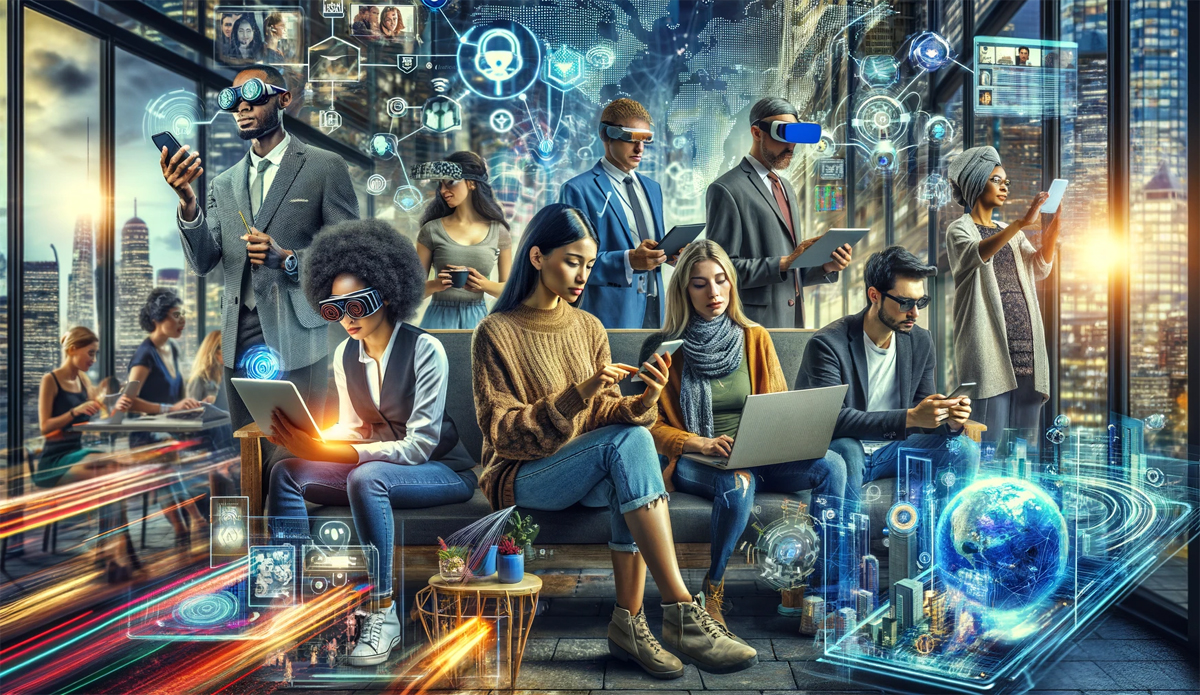
In good ‘ol days we used to actually think, write and edit content for social media. The team used to have a few cups of tea or coffee or a Coke or Pepsi to tickle the brain-cells so that the right content or idea comes out. Forget it! We now have the mighty AI for Social Media that does 90% of the work. However, there is a catch.
In a series of incidents highlighting the ethical dilemmas posed by artificial intelligence, several high-profile cases have raised concerns over privacy, misuse, and responsibility. Google found itself at the center of controversy in July 2023 when a class-action lawsuit was filed, accusing the tech giant of scraping vast amounts of data to train its AI systems, raising serious privacy concerns.
Simultaneously, the misuse of AI for creating deepfakes, particularly of public figures like Elon Musk, has been a recurrent problem. An AI voice scam in Arizona, involving a mother targeted by a clone of her daughter’s voice, demonstrated the sophisticated misuse of AI in criminal activities. Adding to the litany of issues, OpenAI faced a lawsuit for libel when its AI, ChatGPT, made false embezzlement claims about a gun activist.
So, are we ready for the ethical dilemmas AI brings? These incidents not only reveal the teething troubles of our AI-driven world but also cast a spotlight on the pressing need for solid ethical standards and security in AI’s use, especially on social media platforms. As AI’s role in analyzing vast troves of social media data grows, so does the debate among experts. The future of AI in our social fabric hangs in the balance. Let’s explore.
AI for Social Media: An Intro
It’s quite fascinating how AI’s become a bit of a backstage superstar here. It’s not just about those quirky chatbots or snazzy filters anymore. AI’s role in social media has become much more intricate.
It’s like this: Imagine you’re scrolling through your feed, and you keep seeing stuff that just, somehow, catches your interest. That’s AI at work! It’s quietly learning what you like, what makes you tick, and then, voila! It tailors your social media experience to be just your cup of tea.
But it’s not all fun and games, is it? There’s a serious side to it too. AI’s got this massive job of sorting through heaps of posts and deciding what’s cool to show and what’s not. It’s like having a smart but very discreet gatekeeper.
And hey, ever noticed how ads seem to know what you were just thinking about buying? Yep, that’s AI too, working its magic behind the scenes, making sure businesses get to nudge the right audience.
So, in a nutshell, AI for social media is a bit like a behind-the-scenes wizard, making sure your online world is both engaging and, well, surprisingly personal. But as we’ll see, with great power comes great responsibility, right?
Privacy and Data Security
Cameron F. Kerry from the Brookings Institution noted that as AI evolves, it amplifies the ability to use personal information in ways that can intrude on privacy interests. This is especially relevant with the increasing volume and variety of data being generated and collected, raising privacy to the forefront as a global public policy issue. The advanced capabilities of AI in areas like facial recognition systems offer a preview of the privacy issues that emerge, particularly with the rich databases of digital photographs available from various sources.
Briana Brownell, CEO and founder of AI consultancy Pure Strategies, commented on the growing awareness among people that they’ve traded a lot for AI services without fully understanding the bargain they were making. This trade-off has led to rethinking the data being produced, especially as it becomes more personal. Brownell emphasized that with AI data being largely unregulated, companies are walking a fine line when it comes to breaching consumer privacy. She also mentioned that new lawsuits are navigating the legal systems, indicating a period of uncertainty about how these privacy concerns will be resolved.
Here’s where the responsibility bit kicks in. With all this knowledge of AI for Social Media, it’s crucial to keep our digital secrets safe. Think of it as having a powerful friend who knows all your secrets. You’d want them to keep it all under wraps, right? That’s exactly the kind of trust we need from social media platforms.
Bias and Fairness in AI Algorithms
Picture this: you’re scrolling through your social media feed, and you start to notice that most of the content you’re seeing seems a bit, well, one-sided. Ever wondered why? That’s AI at work, but sometimes it can get a bit blinkered.
Here’s the thing – AI for social media learn from the data they’re fed. But if this data is a bit lopsided, showing more of one type of opinion or group of people, the AI starts thinking that’s the whole picture. It’s like if you only ever ate apples, you might start thinking that’s the only fruit out there!
So, what we end up with is an AI that might unintentionally favor certain groups or viewpoints over others. It’s not doing it on purpose, mind you – it’s just a case of garbage in, garbage out. This can be a bit tricky, especially when we’re talking about fairness and keeping everyone in the loop.
Tech whizzes are now trying to sort this out. They’re talking about making these AI algorithms more transparent – like lifting the hood of a car to see how it works. Plus, they’re trying to feed the AI a more varied diet, so it gets a taste of different perspectives and doesn’t just keep serving us apples all the time.
Read our post on Humanizing the AI
The Role of AI for Social Media in Content Moderation
In the social media world, AI’s role in content moderation is quite the talk of the town. Think of AI as a diligent digital gatekeeper, constantly scanning through posts and comments to keep the online space clean and respectful. But it’s not all plain sailing. AI for Social Media can be a bit of a blunt instrument, sometimes struggling to catch the subtle differences between a harmless joke and actual hate speech.
David Berry, a digital humanities expert, points out that AI, for all its smarts, can miss the intricacies of human chatter. It’s like having a robot trying to understand sarcasm – sometimes it just doesn’t get the joke. This can lead to a bit of a muddle, with AI either being overzealous in what it blocks or missing the mark on genuinely harmful content.
Then there’s the issue of bias. AI’s decisions can tilt towards the majority opinion, potentially sidelining minority voices. Stanford University’s Mitchell Gordon explains that what’s considered toxic or acceptable can flip based on who’s judging. It’s a bit like having a panel of judges with different opinions – what one finds offensive, another might not.
So, what’s the way forward? It seems blending AI’s quick scanning ability with a human touch might be the answer. Having AI flag potential issues and humans making the final call could bring in the much-needed context and understanding. But for now, it’s a balancing act – using AI to keep our digital playground safe while making sure it doesn’t dampen the lively banter that makes social media so vibrant.
Impact on Mental Health
The knack of AI for Social Media for curating personalized content can be a real mood booster. Imagine logging in and seeing stuff that’s right up your alley – it’s like having a friend who knows just what you like. But, there’s a flip side to it.
AI-driven feeds can create a bit of an echo chamber, constantly showing us content that aligns with our views or interests. This can be a bit like living in a bubble, not always the healthiest thing for our understanding of the world and our place in it. Plus, there’s the risk of getting hooked. You know how it is, one minute you’re checking your feed, and the next thing you know, hours have gone by.
There’s also the matter of AI not always getting the emotional tone right. It might dish out content that’s a bit tone-deaf to how you’re feeling. Like showing you upbeat stuff when you’re not in the mood, which can feel a bit jarring.
While AI can make our social media experience more engaging, it’s important to remember to take it with a pinch of salt. A bit of balance goes a long way – mixing up our online diet with different types of content and viewpoints can help keep our digital lives, and by extension, our mental well-being, a bit more rounded.
Ethical AI Design and Development
When it comes to designing and developing AI for social media, it’s like walking a tightrope of ethics. It’s not just about making AI smart, it’s about making it responsible too. Think of it as crafting a clever robot that also knows right from wrong.
The first step is like setting the ground rules. This means making sure the AI doesn’t just learn from any old data. It needs the right kind, free from biases and stereotypes. It’s a bit like teaching a child – you want to give them the best and most balanced lessons.
Then there’s transparency, a big word in the AI world. It’s about not having AI as a mysterious black box. Instead, it’s letting people peek inside to see how it ticks, what decisions it’s making, and why. It’s like a chef explaining what goes into a dish, so diners know exactly what they’re eating.
Of course, all this has to be done while keeping an eye on privacy. It’s about respecting people’s digital personal space, not snooping around where you’re not supposed to. Think of it as being a polite guest in someone’s digital home.
Ethical AI for Social Media design and development boils down to building AI that’s not just clever and efficient but also fair, transparent, and respectful. It’s about creating a digital world where AI plays a positive role, helping without overstepping its boundaries.
Conclusion
AI in social media is like a new frontier we’re exploring together. It’s about building a digital space where our interactions are enhanced, not hindered. With AI, we’re looking at a future where our online experiences are more aligned with who we are, respecting our privacy, and offering content that’s both relevant and diverse.
It’s a shared journey, with tech experts, ethical minds, and users like us steering the ship. We’re in this together, shaping AI to be a force that understands and respects our human touch. It’s not just about smarter algorithms; it’s about creating an online community that’s more inclusive and empathetic.
So, as we embrace this tech-savvy era, let’s stay engaged, share our voices, and contribute to a digital world where AI is not just a tool, but a catalyst for positive change. The future of social media with AI looks bright, full of possibilities to connect, learn, and grow. Let’s make the most of it, with a spirit of optimism and collaboration.